Building a Service Marketplace: Connecting Freelancers With Clients & Creating a Modern Digital Economy
In today’s digital-first world, businesses are shifting rapidly. Companies no longer hire talent only through traditional full-time roles. Individuals no longer depend on just one job. Freelancers, creators, designers, developers, marketers, and tutors are becoming a powerful force in the global workforce.
This shift in work culture has opened the door for one of the most profitable, scalable, and high-demand business models today:
A Service Marketplace Platform
A marketplace where freelancers can list their services, clients can hire them, and the platform earns through commission, subscriptions, or premium features.
Platforms like Fiverr, Upwork, Freelancer, and Urban Company have already proven that service marketplaces are not just useful—they are essential in the modern economy.
If you want to build a similar business or understand how such a marketplace works, this blog gives you a complete, detailed, step-by-step guide.
⭐ 1. What Is a Service Marketplace?
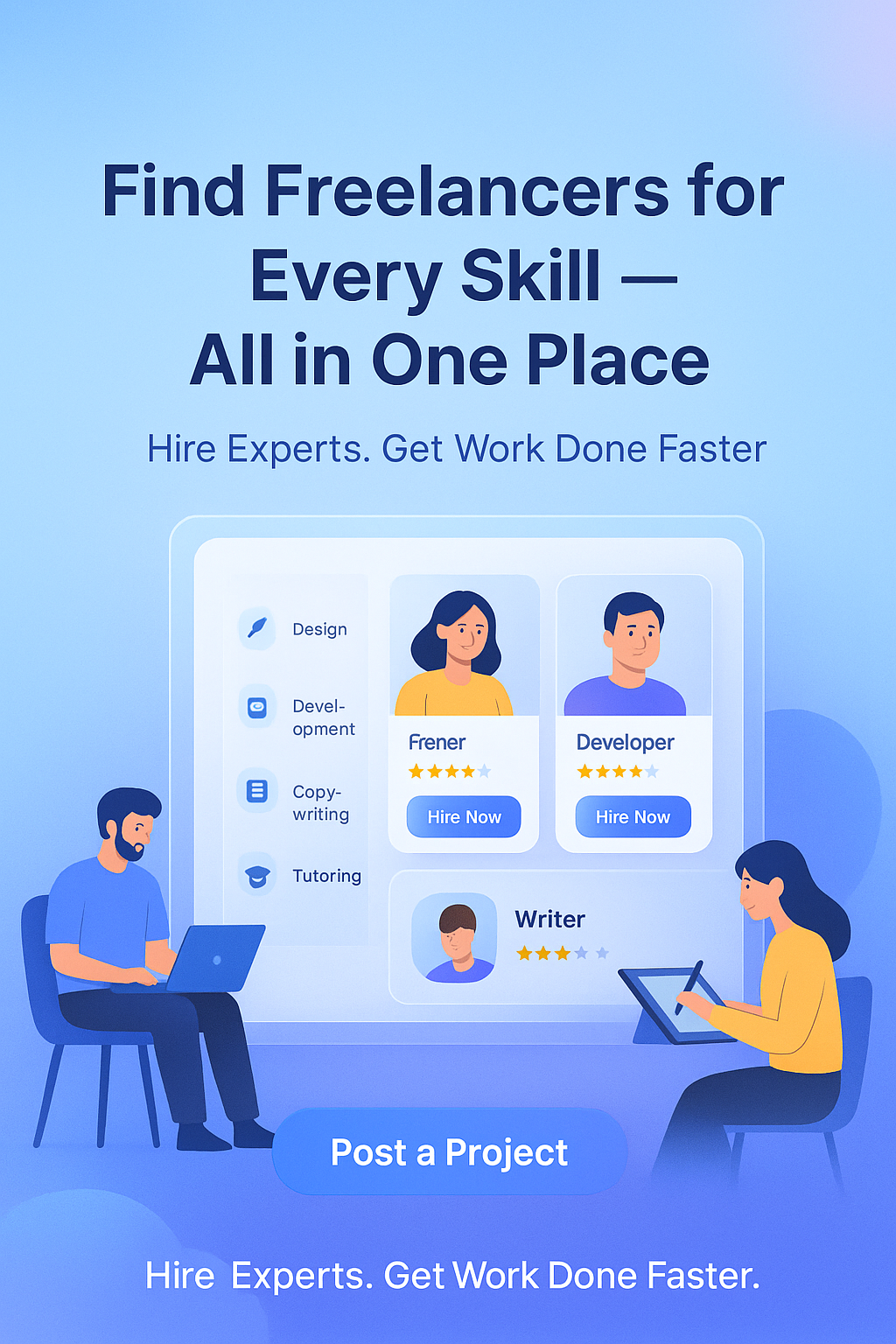
A service marketplace is an online platform where clients hire freelancers for services such as:
Graphic design
App & web development
Content writing
Marketing & branding
Video editing
Animation
Tutoring
Consulting
Home services
Technical tasks
Virtual assistance
It acts as a bridge, connecting people who offer skills with people who need those skills.
Why This Business Model Works
More people want freelance and remote work.
Businesses prefer project-based hiring to reduce costs.
Skill-based work is growing faster than ever.
Digital transformation is pushing companies online.
Freelancers enjoy flexibility, and clients enjoy quick hiring.
This trend makes a service marketplace a high-demand, future-proof business.
⭐ 2. Key Users of the Marketplace
To understand this business deeply, let’s break down the user groups:
🔹 Freelancers
They offer services such as graphics, development, writing, editing, tutoring, and more.
They want:
More clients
Fast payments
Credibility
A platform to showcase their portfolio
🔹 Clients / Buyers
They need skilled professionals for tasks like:
Logo design
Marketing campaigns
Website building
Content creation
Online tutoring
Social media management
UI/UX design
Business consultancy
Clients prefer marketplaces because:
They can compare prices
They can check ratings
They get work faster
There's less risk
🔹 Platform Owner (You)
You act as the mediator and:
Earn commissions
Manage disputes
Maintain platform quality
Provide a safe transaction system
Build a growing ecosystem for freelancers
⭐ 3. Core Features of a Service Marketplace
To make your platform powerful and competitive, you need the right set of features for freelancers, clients, and admin.
🔹 Features for Freelancers
Profile creation
Service listings (gigs)
Portfolio uploads
Pricing packages (Basic, Standard, Premium)
Order management
Chat with clients
Ratings & reviews
Withdrawal system
Earnings dashboard
Service delivery system
Skill badges
Freelancers should feel empowered, safe, and confident while working on your platform.
🔹 Features for Clients
Search and filter for services
Freelancer comparison
Real-time chat
Secure payment system
Custom order option
Order tracking
Review system
Dispute resolution
Refund process
Saved freelancers
Clients must feel the process is smooth, transparent, and efficient.
🔹 Admin Panel Features
To run the platform efficiently, you need:
User management (clients & freelancers)
Listings approval
Payment & commission settings
Subscription management
Advertising controls
Dispute handling
Reports and analytics
Category management
Blog management
SEO tools
CMS for banners & home screens
A strong admin system means strong growth.
⭐ 4. Step-by-Step Process to Build the Service Marketplace
Here is the exact roadmap used by top global platforms:
📌 Step 1: Market Research
Before building, understand:
What categories will you offer?
What competitors exist?
What gaps can you fill?
Who is your target audience?
What is your unique positioning?
Example niches:
Creative marketplace (designers, illustrators, animators)
Developers-only marketplace
Student tutors marketplace
Home service marketplace
Writers marketplace
Startup-focused service platform
Niching down helps you win faster.
📌 Step 2: Choose Your Marketplace Model
You can choose from:
Model 1: General Marketplace
Like Fiverr — all categories.
Model 2: Niche Marketplace
For example:
Only designers
Only developers
Only tutors
Only video editors
Only marketing specialists
These grow faster and attract targeted clients.
📌 Step 3: Platform Architecture
Frontend
Clean UI
Modern interface
Easy search flow
Clear service categories
Backend
Secure
Scalable
Fast
Handles thousands of transactions
Database
Profiles
Services
Orders
Messages
Earnings
Reviews
AI Integration
Smart search
Skill-matching recommendations
Automatic price suggestions
Fraud detection
📌 Step 4: UX & Interface Planning
The user journey must be simple:
Client searches → selects → chats → orders → gets delivery → reviews
Freelancer receives order → works → delivers → earns
Important pages:
✔ Home page
✔ Category pages
✔ Service detail page
✔ Freelancer profile
✔ Order page
✔ Chat system
✔ Payment & wallet
✔ Dashboard for freelancers
Good experience = high retention.
📌 Step 5: Development Phases
Phase 1 — MVP
Launch with:
Freelancer profile
Service listing
Client ordering
Payment gateway
Order tracking
Review system
Basic admin panel
Phase 2 — Enhanced
Add:
Chat system
Advanced search
Subscriptions
Wallet system
Portfolio
Premium features
Phase 3 — Scale
Mobile apps
Advanced AI search
Ad placements
Verified freelancer badges
International payments
Featured listings
This makes the platform professional.
⭐ 5. Monetization Strategy: How the Platform Earns
This business earns in multiple ways:
💰 1. Commission Per Order
You earn 10–20% on every transaction.
This is the core revenue source.
💰 2. Subscription Plans
Freelancers pay for:
More services uploaded
Priority search ranking
Advanced analytics
Portfolio highlights
💰 3. Featured Services
Freelancers pay to promote their gigs.
💰 4. Advertising Revenue
Brands can run ads for:
Tools
Software
Courses
Services
💰 5. Transaction Fees
A small processing fee per order.
💰 6. Affiliate Revenue
Earn by recommending:
Tools (Canva, Figma, Grammarly)
Hosting platforms
Learning platforms
💰 7. Corporate Hiring Solutions
Businesses can hire in bulk and pay premium fees.
This multi-income structure makes the platform highly profitable.
⭐ 6. Launch & Growth Strategy
Launching a service marketplace needs strong marketing.
Here’s how:
🎯 Stage 1: Pre-Launch
Build hype on Instagram, LinkedIn, and WhatsApp
Create a waitlist page
Offer early access benefits
Onboard initial freelancers manually
🎯 Stage 2: Launch
Offer free listing for first freelancers
Run social media ads
Add trending categories
Publish career & skill blogs
🎯 Stage 3: Growth
Collaborate with colleges for student freelancers
Partner with coaching centers
Collaborate with startup incubators
Use influencer marketing
Create video tutorials
Launch referral programs
Growth comes from trust + visibility.
⭐ 7. Why This Business Idea Will Always Work
The service marketplace is evergreen because:
The world is shifting to freelance-based work
More companies prefer remote talent
Students want internships & freelance income
Businesses want project-based hiring
Digital skills are rising massively
Remote work culture is becoming permanent
With the right execution, a service marketplace can grow into a global brand.
⭐ Conclusion
Creating a Service Marketplace Platform is one of the smartest digital businesses today. With the right structure, modern tech, quality control, and a powerful marketing plan, this platform can serve thousands of freelancers and clients.
You become the ecosystem builder.
Freelancers get work.
Clients get experts.
Your platform earns endlessly.
📞 For more details, contact us.
If you want, I can also create:
✅ A premium promotional image
✅ UI/UX layout
✅ Branding name & tagline
✅ Homepage design
✅ Full pitch deck