Launching a Premium Clothing Boutique Website: The Ultimate Expert-Level Guide
In an era where online shopping dominates the retail landscape, the fashion industry is experiencing a significant shift. Premium Clothing Boutique Websites represent a sophisticated intersection of style, exclusivity, and digital commerce. Unlike generic online stores, a premium boutique caters to a refined audience, offering curated collections, personalized experiences, and high-quality products. This guide takes you through the entire process—from conceptualization to execution—so you can build a successful online luxury fashion platform.
1. Understanding the Premium Fashion Market
Before building your website, it is crucial to understand your market:
1.1 What Defines a Premium Clothing Boutique?
A premium boutique is not just a store; it’s an experience. The focus is on exclusivity, high-quality materials, and meticulous curation of products. Customers expect:
Limited-edition or designer collaborations.
Personalized shopping experiences.
Detailed product information and styling suggestions.
Exceptional customer service.
1.2 Market Research & Target Audience
Conducting detailed market research ensures your boutique appeals to the right clientele:
Target Segments:
Affluent Professionals: Seek sophisticated, classic pieces.
Fashion Enthusiasts: Value limited-edition or exclusive collections.
Eco-Conscious Consumers: Prioritize ethically sourced or sustainable luxury.
Gift Buyers: Purchase high-end apparel for special occasions.
Market Trends:
Rise of direct-to-consumer luxury brands.
Increasing demand for personalized fashion experiences.
Growth of online shopping for premium fashion due to convenience and accessibility.
2. Planning Your Boutique: Strategy and Concept
A strong concept differentiates your boutique from mass-market competitors.
2.1 Defining Your Niche
Designer Collaborations: Partner with emerging designers to offer unique collections.
Sustainable Luxury: Focus on eco-friendly fabrics and ethical sourcing.
Cultural or Regional Styles: Curate collections that celebrate local craftsmanship.
Occasion-Based: Premium attire for weddings, corporate events, or festive seasons.
2.2 Brand Identity
Branding is central to a premium boutique’s appeal:
Logo and Typography: Minimalistic, elegant, and memorable.
Color Palette: Subtle tones (black, beige, gold, pastel) that convey sophistication.
Visual Storytelling: Use lifestyle imagery, fashion editorials, and model shoots to highlight the lifestyle behind the brand.
3. Website Features and Design Principles
A premium boutique requires a website that is both visually stunning and technically robust.
3.1 User Experience (UX) Design
Intuitive Navigation: Clear categories like Women, Men, Accessories, Limited Editions.
Advanced Filtering: Sort by designer, collection, size, color, or occasion.
Search Functionality: Smart search with predictive suggestions.
3.2 Visual Design
High-resolution product images (multiple angles, zoom-in features).
360° product views for a tactile online experience.
Minimalist layout to let products shine.
3.3 Core Website Features
Homepage: Highlight curated collections, limited editions, and featured products.
Product Pages: Material description, size guide, style recommendations, designer notes.
Checkout & Payment: Smooth, secure checkout with multiple payment gateways (cards, wallets, UPI, international payments).
Customer Account: Wishlist, order history, style preferences.
Blog & Style Guides: Provide fashion insights, styling tips, and seasonal trends.
AI Personalization: Suggest outfits based on browsing history, previous purchases, or style quizzes.
Mobile Optimization: Ensure responsive design across devices.
4. Operational Workflow
Efficient operations underpin a seamless luxury shopping experience.
4.1 Inventory and Supplier Management
Partner with trusted designers and brands.
Maintain limited stock to create exclusivity.
Consider pre-orders or dropshipping to reduce inventory risk.
4.2 Photography and Content
Professional photoshoots for all products.
Include lifestyle shots, detailed textures, and designer insights.
Create product descriptions that reflect quality and exclusivity.
4.3 Order Fulfillment
Partner with premium logistics services.
Provide express delivery and white-glove packaging.
Implement tracking notifications and delivery updates.
4.4 Customer Service
Offer multi-channel support (chat, email, phone).
Provide personalized styling advice.
Easy return and exchange policies with clear guidelines.
5. Marketing Strategy
Marketing a premium clothing boutique requires precision, sophistication, and exclusivity.
5.1 Social Media Presence
Focus on Instagram, Pinterest, and TikTok for visually appealing content.
Post professional photos, fashion reels, and behind-the-scenes content.
Collaborate with fashion influencers who align with your brand’s aesthetic.
5.2 Search Engine Optimization (SEO)
Target keywords like “premium fashion online,” “luxury clothing boutique,” and “designer collections.”
Optimize product pages with detailed descriptions, alt-text, and meta tags.
5.3 Email & Loyalty Marketing
Build an email list through subscription offers.
Send exclusive early-access invites and curated style tips.
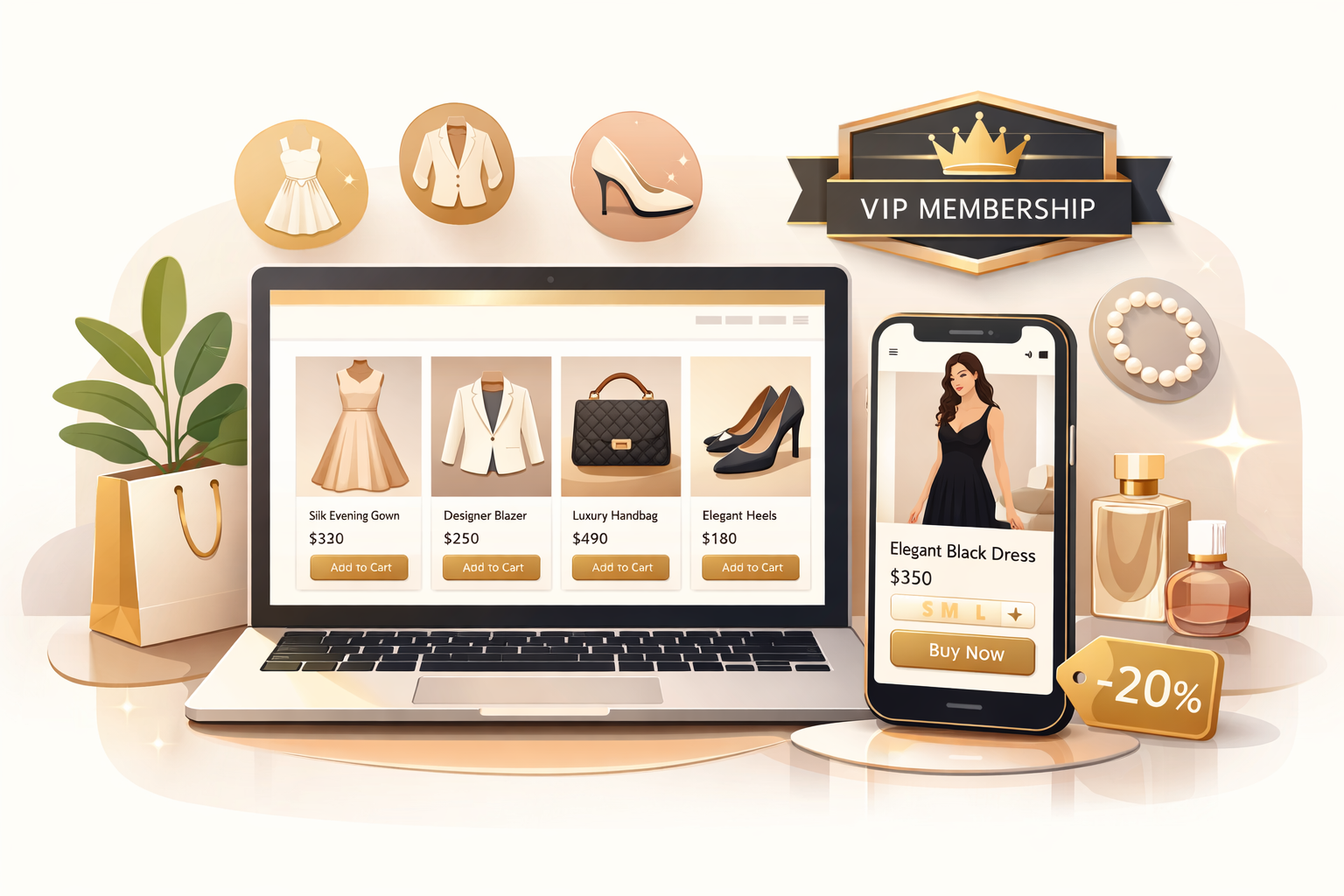
Reward repeat customers with loyalty points or VIP memberships.
5.4 Paid Advertising
Target affluent audiences via Facebook, Instagram, and Google Ads.
Use retargeting campaigns for cart abandoners or repeat visitors.
5.5 Content Marketing
Publish fashion blogs, designer interviews, and style guides.
Create seasonal lookbooks and digital catalogs.
6. Monetization Models
Direct Product Sales: Premium pricing for exclusivity.
Limited Edition Drops: Create hype and urgency.
Subscription Boxes: Monthly or quarterly curated clothing boxes.
Collaborations: Co-branded collections with designers.
Upselling & Cross-Selling: Accessories, shoes, or complementary apparel.
7. Technical Setup
A robust tech stack ensures smooth operation and scalability.
Platform Options: Shopify Plus, WooCommerce, Magento, or custom-built e-commerce.
Hosting & Security: Fast, secure hosting with SSL certificates.
Analytics Tools: Google Analytics, Hotjar for behavior insights.
AI & Automation: Chatbots, recommendation engines, inventory management automation.
8. Challenges & Mitigation Strategies
8.1 Standing Out in a Crowded Market
Offer exclusive collections, personalized services, and superior branding.
8.2 Managing Returns and Inventory
Implement drop-shipping or limited stock.
Clear return/exchange policies to maintain customer trust.
8.3 Building Trust Online
Offer secure payments, authentic product descriptions, and detailed reviews.
Highlight designer authenticity and quality assurance.
9. Growth Strategies
International Expansion: Offer worldwide shipping with luxury packaging.
Collaborations with Influencers: Boost brand visibility.
Customer Loyalty Programs: Encourage repeat purchases and referrals.
Omni-Channel Presence: Consider pop-up stores or events for physical interaction.
10. Conclusion
Launching a Premium Clothing Boutique Website combines the art of fashion curation with the science of digital commerce. Success requires a blend of exclusive products, elegant design, seamless user experience, and strategic marketing. By focusing on personalization, storytelling, and premium service, your boutique can position itself as a leader in online luxury fashion.
With careful planning, robust technology, and a sophisticated brand strategy, a premium clothing boutique website can transform into a profitable, long-term business, attracting style-conscious consumers worldwide.