How to Build a Profitable Online Classifieds Website: Step-by-Step Guide
In today’s fast-paced digital world, buying and selling used items has become increasingly convenient online. Platforms like OLX, Quikr, and Letgo have demonstrated that a simple online marketplace for classifieds can generate significant traffic, engagement, and revenue. If you’re considering creating your own Online Classifieds Website, this blog will guide you through the full process — from conceptualization to launch and monetization.
Understanding the Idea
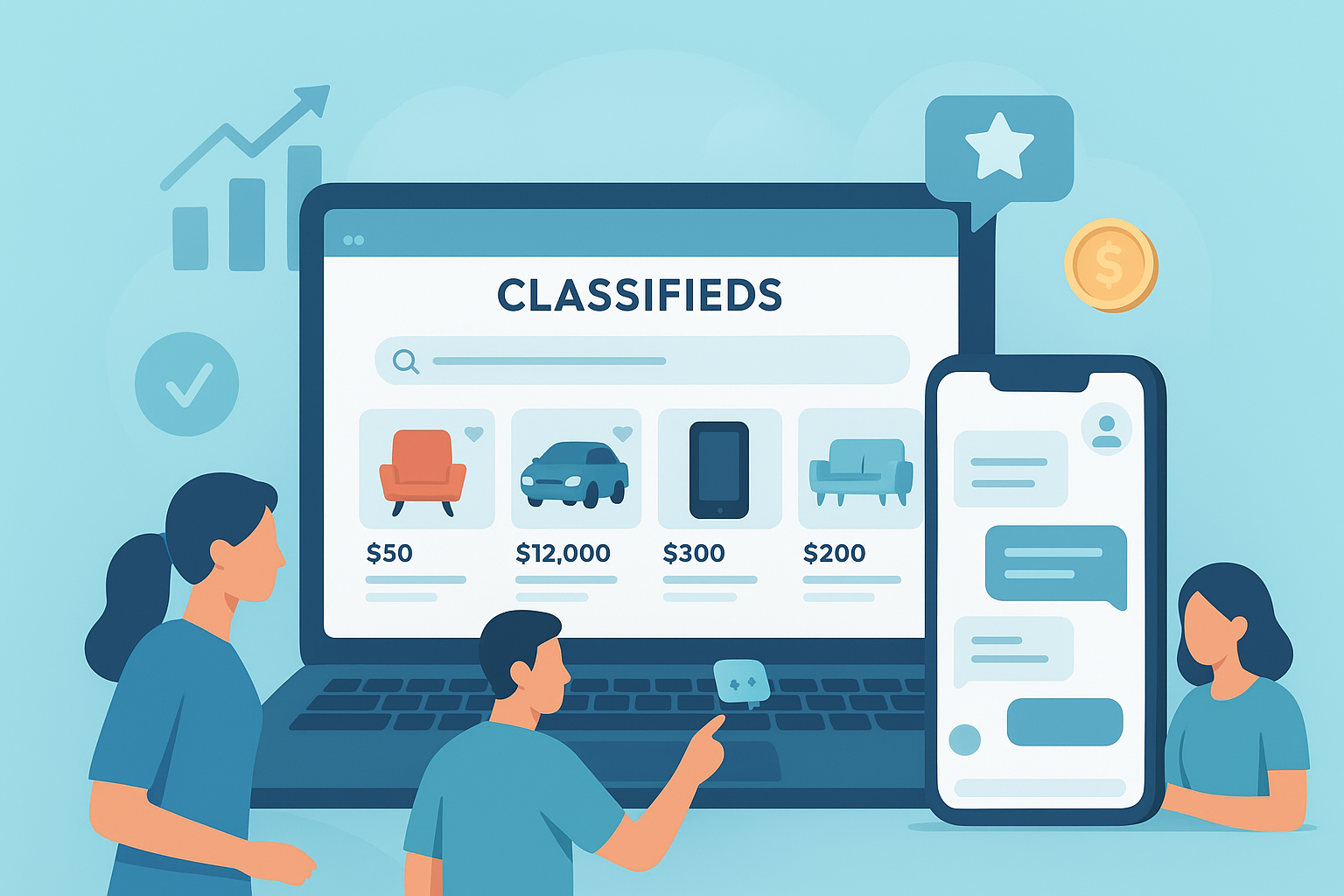
An Online Classifieds Website is a digital marketplace where individuals can list items they want to sell or buy. Common categories include:
Used items: Clothing, books, appliances
Vehicles: Cars, bikes, scooters
Furniture: Sofas, beds, tables
Electronics: Phones, laptops, cameras
The goal is to create a platform where users can quickly post ads, search for items, and connect with buyers or sellers in a safe, user-friendly environment.
Step 1: Market Research and Target Audience
Before building the platform, understanding the market is critical:
Identify Competitors: Analyze platforms like OLX, Quikr, and Facebook Marketplace. What do they do well? Where are their gaps?
Target Audience: Decide who your primary users are — college students, urban professionals, families, or niche communities.
Unique Value Proposition (UVP): Offer features that competitors lack, such as instant chat, verified listings, AI-based recommendations, or hyperlocal search.
Step 2: Platform Features and Functionality
A successful classifieds platform balances simplicity with utility. Key features include:
For Users:
Account registration and profile management
Posting ads with images, description, and price
Search and filters by category, location, and price
Messaging or chat feature for buyers and sellers
Ratings and reviews
For Admins:
Dashboard to monitor listings and users
Moderation tools for inappropriate content
Analytics for user activity and revenue tracking
Payment and subscription management
Optional advanced features:
AI recommendations to show relevant listings
Push notifications for new items in user-preferred categories
Social media login integration
Step 3: Website and App Development
The next step is building the platform. You can either:
Custom Development: Hire a team of developers to create a scalable web and mobile application.
Tech stack for web: React.js or Angular (frontend), Node.js or Python Django (backend), MySQL or MongoDB (database)
Tech stack for mobile: React Native or Flutter for cross-platform apps
Use SaaS or Pre-Built Solutions: Platforms like ShareTribe, AppyPie, or WordPress plugins (ClassiPress) allow faster deployment with less cost.
UI/UX Considerations:
Minimal, clean interface similar to OLX
Smooth navigation with intuitive search and filters
Mobile-first design since most users browse on smartphones
Step 4: Monetization Strategies
An Online Classifieds Website can generate revenue in multiple ways:
Premium Listings: Charge users to feature their ads at the top of search results.
Subscription Plans: Offer sellers monthly packages for unlimited postings or premium features.
Advertisements: Display third-party ads or banner ads for additional revenue.
Transaction Fees: If your platform supports payments, take a small commission per sale.
Step 5: Marketing and User Acquisition
Building the website is only half the battle; attracting users is equally critical:
Social Media Marketing: Promote your platform on Facebook, Instagram, and LinkedIn targeting local audiences.
SEO Optimization: Optimize your website for search engines with relevant keywords like “buy used furniture near me” or “sell old electronics online.”
Local Campaigns: Partner with colleges, offices, and local communities to attract sellers and buyers.
Referral Programs: Encourage users to invite friends in exchange for benefits like free premium listings.
Step 6: Security and Trust
Trust is key in classifieds platforms:
User Verification: Use email or phone verification to reduce spam.
Fraud Detection: Monitor suspicious listings or transactions.
Data Privacy: Ensure GDPR or local compliance for user data.
Ratings & Reviews: Allow users to rate sellers and buyers to maintain credibility.
Step 7: Scaling the Platform
Once your platform gains traction, focus on scaling:
Expand categories based on demand
Launch mobile apps for iOS and Android if initially web-only
Introduce AI or machine learning for personalized suggestions
Explore tie-ins with logistics partners for a smoother transaction process
Conclusion
An Online Classifieds Website is a proven business model that combines simplicity with high potential for growth and revenue. By understanding your market, building a user-friendly platform, monetizing effectively, and maintaining trust, you can create a thriving online marketplace for used items, vehicles, furniture, and electronics.
With consistent marketing, smart scaling, and innovation, your platform could become the next go-to hub for online buyers and sellers in your region.
📞 For more details, contact us.