How to Build a Profitable Learning Community Platform in 2025: An Expert Step-by-Step Blueprint
In 2025, the world of online education is undergoing a fundamental shift. People are no longer satisfied with passive video courses—they want interaction, mentorship, community, and belonging. This has given rise to one of the fastest-growing digital business models: Learning Community Platforms.
These platforms bring together people with shared interests—founders, coders, creators, learners—inside structured communities that offer guidance, content, collaboration, and accountability.
They generate predictable recurring revenue through membership fees, while requiring minimal setup cost and offering unlimited scalability.
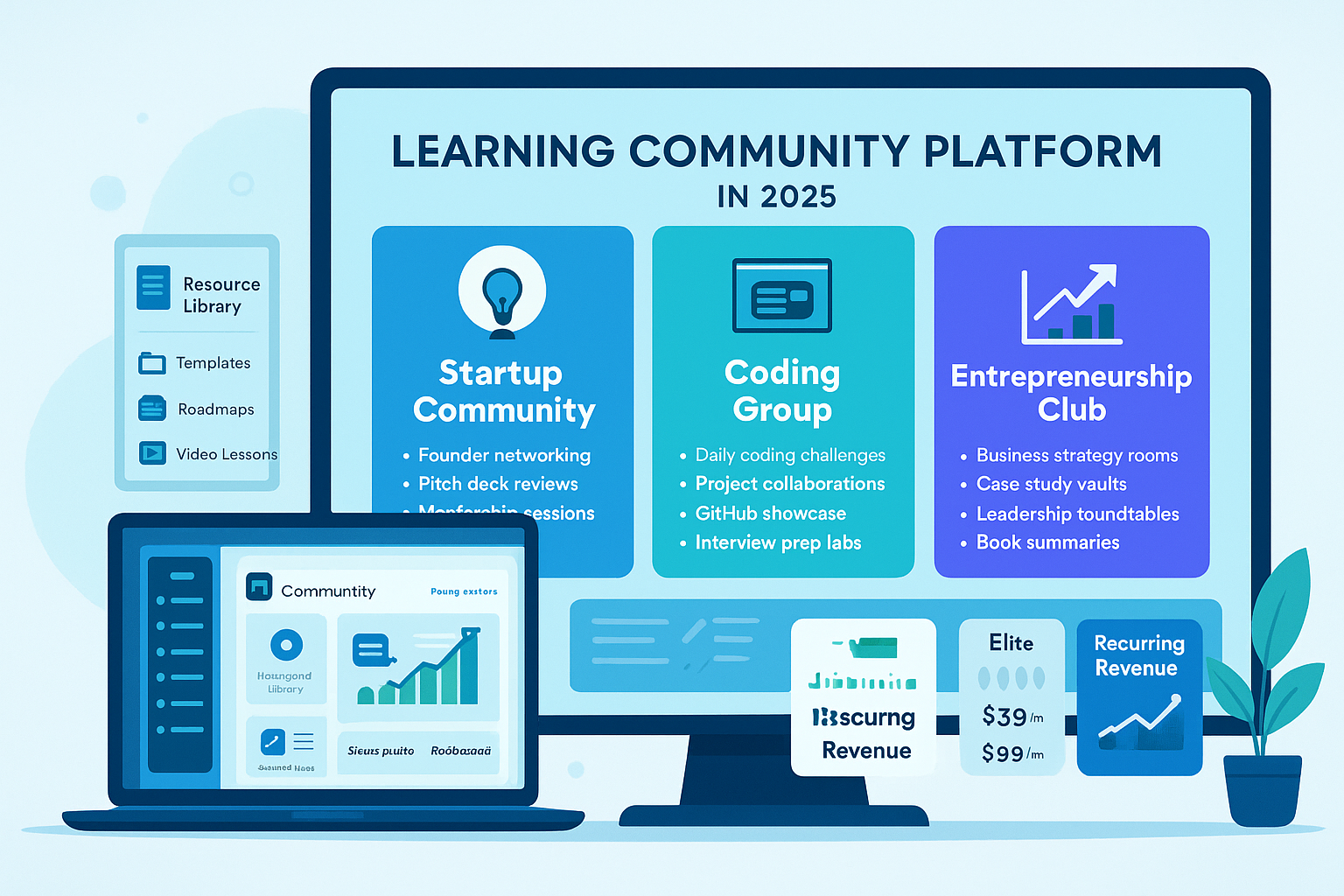
In this expert-level guide, we’ll break down how to build a high-value, revenue-generating learning community platform centered around three powerful pillars:
Startup Community
Coding Group
Entrepreneurship Club
Let’s dive into the complete blueprint.
Why Learning Communities Are the Future of Online Education
1. The Rise of Cohort-Based Learning
People learn faster when they have peers, challenges, and real-time accountability. Communities provide what online courses lack—support and interaction.
2. Digital Isolation Created Demand for Skill-Based Communities
Individuals want professional and social connection centered around learning, not entertainment.
3. Membership-Based Models Provide Stability
Subscription-based communities ensure stable MRR (Monthly Recurring Revenue), unlike one-time course sales.
4. Communities Build Stronger Brands
A thriving community increases trust, authority, word-of-mouth visibility, and brand lifetime value.
In short, a learning community is not just an education product—it’s a full ecosystem.
Phase 1: Strategic Foundation
1. Identify Your Core Ecosystem
Your platform will house three high-demand, evergreen communities:
✔ Startup Community
Target audience:
Aspiring founders
First-time entrepreneurs
Students exploring startups
Solopreneurs
Value offerings:
Startup playbooks
Pitch-deck audits
Community-driven idea validation
Founder networking
Sessions with investors & mentors
✔ Coding Group
Target audience:
Students
Job seekers
Freshers
Working professionals
Developers upskilling
Value offerings:
Daily coding challenges
Community projects
GitHub collaborations
Interview preparation
Guided roadmaps (Web Dev, Python, AI, etc.)
✔ Entrepreneurship Club
Target audience:
Small business owners
Freelancers
Corporate professionals
Early-stage entrepreneurs
Value offerings:
Business frameworks
Mindset training
Leadership development
Case studies
Live book breakdowns
Phase 2: Platform Development
2. Select the Ideal Community Platform
Your platform must support:
Channels
Events
Live sessions
Resources
Payments
Member analytics
Preferred platforms for 2025:
Circle – Best for professional learning ecosystems
Mighty Networks – Community + courses + memberships
Discord – Great for younger audiences / coding groups
Kajabi – Premium all-in-one system
Geneva – Clean UX for structured communities
Choose your platform based on the audience and scale.
3. Architect Your Community Structure
To feel premium and professional, your community must have segmented spaces:
Core Rooms
Announcements
Resource Library
Weekly Tasks
Community Helpdesk
Member Introductions
Event Calendar
Startup Community Rooms
Idea Validation Hub
Pitch Deck Review Space
Founder Networking Zone
Startup Tools & Templates
Coding Group Rooms
Daily Coding Challenges
Project Collaboration
Interview Prep Lab
GitHub Showcase Channel
Debugging Lounge
Entrepreneurship Club Rooms
Book Summaries
Case Study Vault
Business Strategy Zone
Leadership Roundtable
Professional structure = high perceived value.
Phase 3: Value Creation
4. Build a High-Value Resource Library
Members pay for value + community. Your library should include:
Startup templates
Coding roadmaps
Pitch deck frameworks
Business model canvases
Video lessons
Project-based learning resources
Tools lists
Community challenges
Past event recordings
The more assets you offer, the higher you can price your membership.
5. Introduce Mentors, Experts & Guest Speakers
Expert involvement increases:
Authority
Trust
Engagement
Member retention
Invite:
Founders
Venture capitalists
Senior developers
Product managers
Growth marketers
This transforms your community from “group” to “premium learning environment.”
Phase 4: Monetization Strategy
6. Design a Tiered Membership Model
A scalable membership system may look like:
Starter Plan — ₹299–₹499/month
Access to:
Community
Challenges
Basic resources
Growth Plan — ₹999–₹1499/month
Includes:
Advanced resources
Weekly live sessions
Guest speakers
Project reviews
Elite Plan — ₹4999+/month
Includes:
One-on-one mentorship
Personalized feedback
Dedicated mastermind group
Exclusive startup & coding sessions
Tiered pricing allows you to cater to all budgets.
7. Additional Revenue Streams
A learning community can generate multiple income sources beyond membership fees:
✔ Paid workshops
✔ Digital products
✔ Mini-courses
✔ Certification programs
✔ Affiliate marketing
✔ One-on-one consulting
✔ Startup pitch polishing services
✔ Community-led hackathons
Most creators earn 40–60% of revenue from add-ons.
Phase 5: Launch & Growth Strategy
8. Pre-Launch Preparation
Build anticipation by:
Posting value content
Hosting free webinars
Building a waitlist
Creating a launch video
Offering early-bird discounts
Your messaging must highlight outcomes, not features.
9. Marketing Channels That Work Best
Organic Channels
Instagram Reels
LinkedIn authority posts
YouTube shorts
Twitter threads
WhatsApp communities
Paid Channels
Meta ads
Google search ads
YouTube pre-roll ads
Community-Led Growth
Referral rewards
Influencer collaborations
Campus ambassadors
10. Retention & Engagement: The Success Formula
A community thrives only when members stay engaged.
Use:
Weekly challenges
Accountability groups
Monthly hackathons
AMA sessions
Peer-to-peer reviews
Progress badges
Leaderboards
Gamification
High engagement = high retention = high recurring income.
Phase 6: Scaling Your Platform
Once your community stabilizes, scale it like a real company.
🚀 Build your own mobile app
🚀 Introduce premium niche sub-communities
🚀 Partner with colleges, incubators & tech hubs
🚀 Launch global cohorts
🚀 Build corporate training modules
🚀 Host offline events & conferences
🚀 Sell lifetime or VIP access
This transforms your community into a full-fledged learning ecosystem.
Conclusion: The Future Belongs to Community-Driven Learning
In 2025 and beyond, the winning businesses in the education space will be those that combine content, community, collaboration, and mentorship into a unified learning experience.
Building a learning community platform centered around startups, coding, and entrepreneurship positions you at the heart of three booming markets. With the right structure, experts, and engagement strategy, it becomes a powerful recurring-revenue business with compounding growth potential.
If executed correctly, what starts as a simple community can evolve into a full-fledged learning empire.
If you want, I can also prepare:
✅ SEO-optimized title + keywords
✅ A Landing Page script for your platform
✅ Membership pricing table
✅ 30-day launch plan