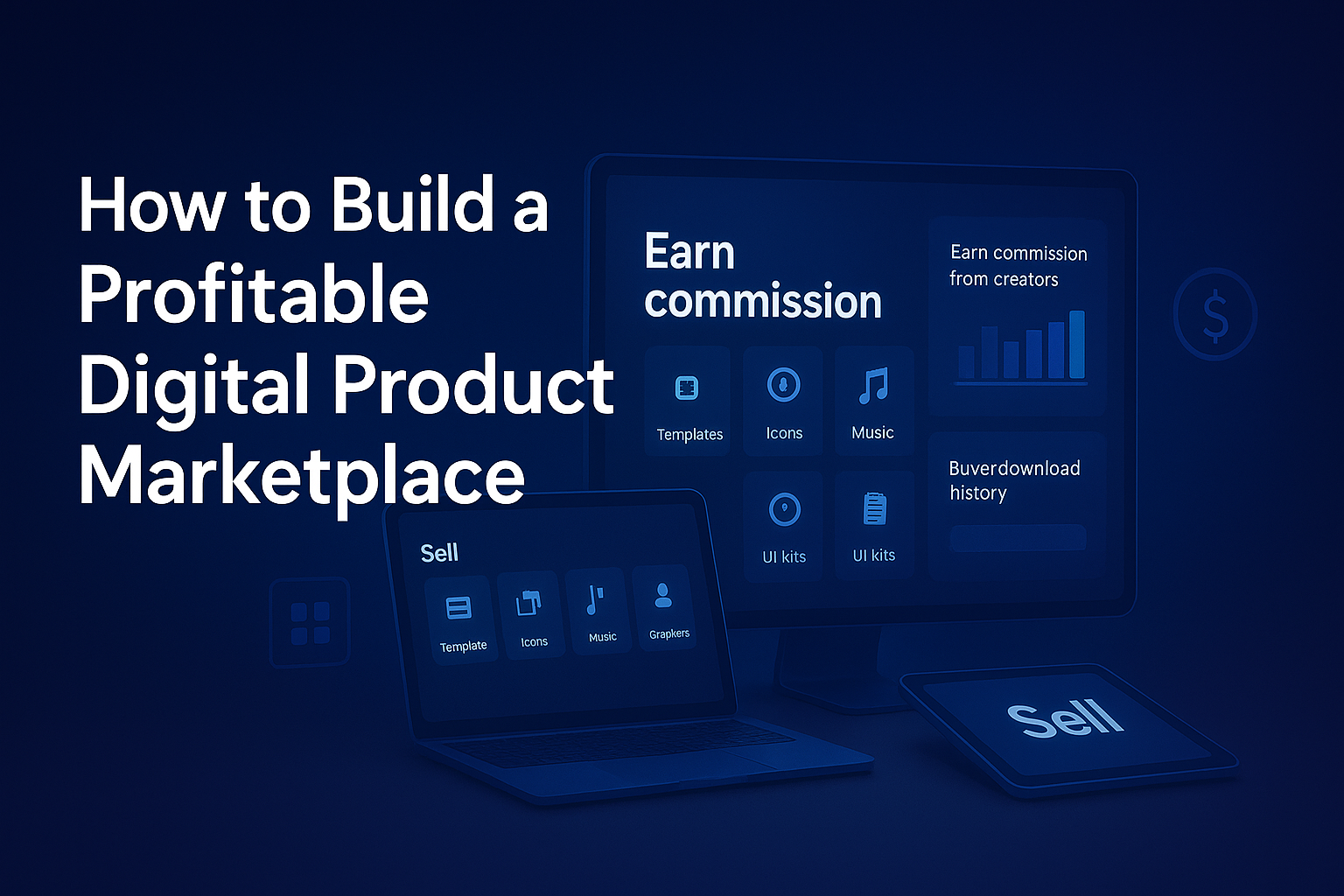
How to Build a Profitable Digital Product Marketplace: Complete Step-by-Step Guide
In the creator-driven world we live in, digital products have become one of the most scalable and lucrative forms of online business. Creators are designing templates, icons, music, UI kits, infographics, Lightroom presets, thumbnails, and more — and buyers are constantly searching for high-quality digital assets to speed up their workflows. A Digital Product Marketplace acts as the bridge between these creators and customers.
If you’re thinking about building a Digital Product Marketplace where creators upload their work and you earn commissions from every sale, you’re tapping into a business model with massive potential and minimal overhead. This guide walks you through what it is, how it works, and how to build it step-by-step.
What is a Digital Product Marketplace?
It is an online platform where creators can upload, price, and sell downloadable digital assets. You provide the platform — they provide the content — and each time a sale happens, you earn a commission.
Examples of such platforms include:
Envato Market
Creative Market
UI8
ThemeForest
Gumroad (single-seller but similar model)
Your platform will focus on categories like:
Templates (social media, CVs, websites, PPT)
Icons & Illustrations
Music / Sound Effects
Graphics & Design Elements
UI Kits / Component Libraries
Why This Business Model Works So Well
1. Zero inventory
You don’t store physical products. Everything is digital.
2. Infinite scalability
One digital file can be sold 1,000,000 times without increasing cost.
3. Recurring passive revenue
Every new creator added to your platform grows your profit stream indefinitely.
4. Creators need distribution
Designers, musicians, and developers want sales — you give them reach.
5. Extremely high profit margins
Commission-based marketplaces earn 20%–60% without producing anything themselves.
Full Step-by-Step Process to Create the Marketplace
Let’s go deep into each stage and understand exactly how to build this business.
1. Define Your Niche and Positioning
You can create a broad marketplace or focus on a specific niche.
Broad Marketplace
Everything: templates, icons, audio, 3D assets, design items.
Niche Marketplace Examples
Only UI kits for app designers
Only business templates for entrepreneurs
Only sound effects for video creators
Only icons and illustration packs
Why niche helps:
It reduces competition, improves SEO ranking, and attracts a very specific target audience.
2. Decide the Product Categories
A smart digital marketplace groups items into clear categories:
Core Categories
Templates (resume, pitch deck, social media, website)
Graphics & Illustrations
Icons Packs
UI/UX Kits
Music & Sound Effects
Stock Photos
3D Models
Fonts
Advanced Categories (to scale later):
Motion graphics
Code snippets / components
Lightroom presets
After Effects templates
Canva templates
Start small → Expand later.
3. Plan the Revenue Model
Your money comes through commissions. Set a transparent commission structure.
Possible commission models:
Option 1: Flat commission
30% per sale
Option 2: Tiered commission
New sellers → 40%
Mid-level sellers → 30%
Top sellers → 20%
This encourages creators to upload more.
Option 3: Subscription model for sellers
Creators pay ₹299–₹999/month to access premium features like:
Lower commission
Priority listing
Creator dashboard analytics
Early payouts
Unlimited uploads
Option 4: Buyer subscriptions
Buyers pay monthly for:
Unlimited downloads
Priority support
Exclusive premium assets
4. Build the Platform (The Technical Blueprint)
Your platform will need:
A. Homepage
Trending items
Best-selling creators
Featured categories
Search bar filtering by product type
B. Product Listing Page
Every product must include:
High-quality previews
Live demo (for UI kits or templates)
License details
Ratings & reviews
Seller profile
Add-to-cart + Buy-now
C. Seller Dashboard
Creators must be able to:
Upload products
Set pricing
See sales analytics
Track payouts
Manage licenses
Handle customer messages
D. Buyer Dashboard
Buyers get:
Download history
Purchase receipts
Support tickets
Favourite list / wishlist
E. Admin Panel (Your control center)
As the marketplace owner, you must be able to:
Approve products
Approve new sellers
Set commission
Manage payouts
Block/ban sellers
Create category pages
Track revenue
F. Secure Payment Gateway
Use:
Razorpay
Stripe
PayPal
Paytm
Payout System
Creators should receive:
Weekly
Bi-weekly
Monthly
via UPI / Bank Transfer / PayPal.
5. Build Trust Through Licensing
You must offer clear licensing:
Types of Licenses
Personal Use License
Commercial Use License
Extended Commercial License
Creators choose the license for each product, and pricing changes accordingly.
6. Attract Creators First
Your marketplace is worthless without creators.
So start with creator onboarding.
How to attract creators:
Offer high commissions in the beginning
Give early creators “Featured Creator” badges
Provide simple upload tools
Allow creators to import from platforms like Gumroad or Envato
Run social media ads targeting designers, musicians, and developers
Offer creator incentives:
Zero commission for first 3 months
Free premium listing
Referral bonuses
Social media shoutouts
7. Attract Buyers (Your Growth Strategy)
SEO Strategy
Buyers usually search things like:
“resume templates”
“icon packs download”
“UI kit for mobile apps”
“background music for videos”
Create category pages optimized for these keywords.
Social Media Marketing
Use:
Instagram (Reels showing templates and assets)
YouTube (How-to videos)
LinkedIn (for professional templates)
Pinterest (high-traffic digital product audience)
Paid Ads
Run smart ads for:
Designers
Video creators
Agencies
Students
Startup founders
Influencer Collaborations
Partner with:
UI/UX YouTubers
Design influencers
Productivity creators
8. Maintain Quality Through Moderation
Not all creators will upload high-quality files.
So you must:
Manually approve products
Reject low-quality assets
Prevent duplicate content
Disable copied or pirated resources
This builds trust and premium brand value.
9. Scaling Up the Marketplace
Once you start getting traction, you can scale using:
A. Introduction of AI Tools
AI keyword tagging for seller uploads
AI preview generator
AI search suggestions
AI-based product recommendations
B. Community Building
Monthly creator contests
Leaderboards
Badges
Marketplace awards
C. Introduce Team Accounts
Allow agencies to create team profiles and share revenue.
D. Add SaaS Features
Offer tools like:
Online Banner Maker
Resume Builder
Thumbnail Maker
Logo Creator
These act as upsells and attract more users.
Final Thoughts
A Digital Product Marketplace is one of the smartest online businesses you can start today. It’s scalable, low-cost, and grows automatically as more creators join your platform. With the right mix of technology, marketing, and creator–first policies, you can build a profitable ecosystem where designers, developers, musicians, and creators contribute meaningful digital products — and you earn commissions from every sale.
If you execute it well, this can become a multi-crore online business in the next 1–2 years.
If you want, I can also create for you:
✅ A 4000-word expanded version
✅ A premium cinematic promotional image prompt
✅ A business plan (USP + revenue + marketing + features)
✅ A pitch deck for investors