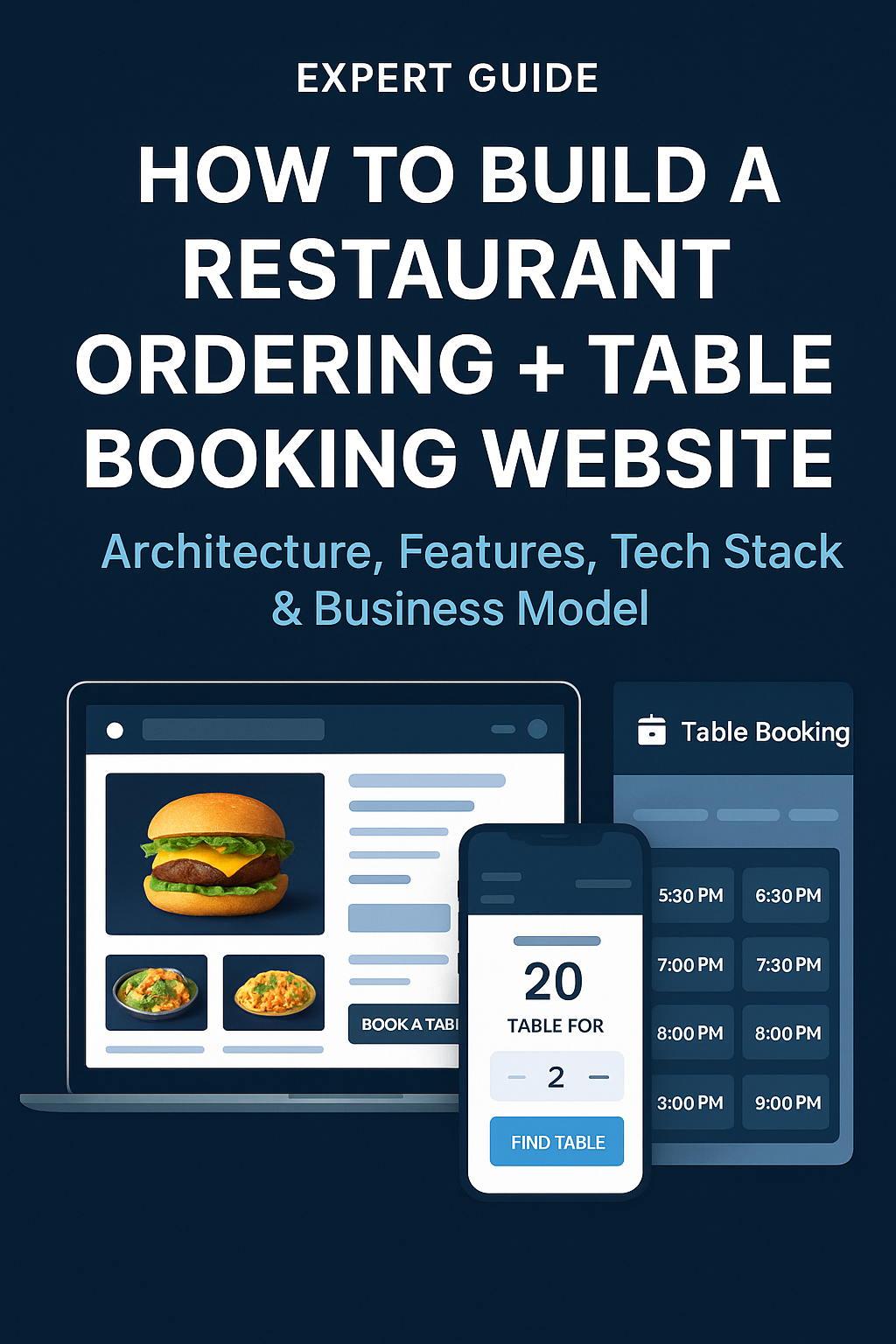
🔍 Expert Guide: How to Build a High-Performance Restaurant Ordering + Table Booking Website (Architecture, Features, Tech Stack & Business Model)
Digital transformation is reshaping the food industry faster than ever. Customers expect frictionless online ordering, real-time table availability, and quick checkout experiences. Restaurants that adopt advanced digital solutions enjoy higher order volumes, reduced operational overhead, and increased repeat customers.
This expert-level guide breaks down how to design, architect, develop, and scale a professional Restaurant Ordering + Table Booking Website—from system flow to monetization, UI/UX, and marketing strategies.
⭐ Market Opportunity & Industry Insight
Online food ordering and table reservation systems are experiencing explosive growth:
Global Online Food Delivery Market: $500+ Billion
Reservation Tech Adoption (2025): Used by 70% of mid/high-end restaurants
Customer Behaviour: 62% prefer restaurants offering online table booking
Restaurants adopting digital solutions see:
✔ 30–50% increase in monthly orders
✔ 2× growth in festive or weekend reservations
✔ 20–25% reduction in staff dependency
This makes a Restaurant Ordering + Booking Website not just a convenience—but a competitive business advantage.
🏗 System Architecture: How the Platform Works (Expert Breakdown)
A real-world, scalable restaurant platform requires a three-tier architecture:
1. Frontend Layer (Client Interface)
Used by customers and staff.
Core Technologies:
Next.js / React.js → SEO + performance
Tailwind CSS / Chakra UI → modern design
React Query / Redux Toolkit → state management
WebSockets or Firebase → real-time order updates
Key Components:
Menu UI (category → item → customization)
Cart & checkout
Table booking UI with time slot picker
Real-time available tables
Payment UI
Order tracking interface
2. Backend Layer (Server)
Backend handles logic, security, and data consistency.
Tech Options:
Node.js + Express (most flexible & scalable)
Laravel (PHP) (best for rapid development)
Django (Python) (enterprise-level security)
Business Logic Modules:
🔹 Menu Management
CRUD for items, categories, variations, add-ons.
🔹 Order Engine
Order creation
Order routing to kitchen
Order acceptance / rejection
Status events (Accepted → Preparing → Ready → Out for delivery)
🔹 Table Booking Logic
The heart of the reservation system:
Table capacity mapping
Time-slot generator
Conflict detection
Waiting list logic
Auto-release system after no-show
🔹 Payment Gateway Integration
Razorpay / Stripe / Paytm with event-based callbacks.
🔹 Notifications Engine
SMS (Twilio, MSG91)
WhatsApp API
Email alerts
🔹 Admin ACL (Access Control Layer)
Super Admin → Restaurant Admin → Staff/Kitchen Roles
3. Database Layer
Recommended Databases:
PostgreSQL (capacity rules + relational)
MongoDB (flexible menu structure)
Critical Tables/Collections:
Users
Restaurants (if multi-restaurant)
Menu
Orders
Order Items
Tables
Bookings
Payment Logs
Coupons
Staff Roles
Advanced Optimization:
Redis caching for fast menu loading
ElasticSearch for dish search
CDN for images
🧠 UX & UI Best Practices for Maximum Conversion
Top restaurant platforms follow these design principles:
1. Zero-Friction Ordering Flow
Menu → Add to cart → Payment → Order placed (4 steps max)
2. Predictive Table Availability
Automatically show:
Tables available
Next available slot
Peak hour recommendations
3. Visual-First Menu Layout
High-quality images increase conversions by 42%.
4. Real-Time Feedback UI
Loading skeletons, live order status, and booking confirmation.
5. Mobile-First Design
80% orders are placed via mobile devices.
⚙️ Key Features (Expert Level)
Customer Portal
Browse menu by category & popularity
Custom options (addons, spice levels, toppings)
Booking calendar with table availability
Delivery scheduling
Real-time order tracking
Saved addresses & payment methods
Loyalty program
Coupon/offer engine
Restaurant Admin Portal
Menu manager
Intelligent order queue
Table occupancy map
Booking calendar
Staff management
Delivery radius mapping
Reporting dashboard (sales, peak hours, best dishes)
Super Admin Panel (If Multi-Restaurant Platform)
Restaurant onboarding system
Commissions setup
Settlement cycle
Advanced analytics
Marketing tools for restaurants
🚀 Monetization Models (Expert Insights)
You can build and sell this platform to restaurants using:
1. Subscription Model (SaaS)
₹999 – ₹4,999/month (depending on features)
2. Per-Order Commission
5% – 12% per order (similar to Zomato/Swiggy but with lower rates)
3. Table Booking Commission
₹3 – ₹5 per reservation
4. Add-On Revenue Streams
White-label mobile app
SMS/WhatsApp gateway
Delivery partner integration
QR menu system
Digital marketing services
5. Setup Charges
₹10,000 – ₹50,000 for one-time setup
🔧 Recommended Tech Stack (Enterprise Level)
Frontend
Next.js
React.js
Tailwind CSS
Framer Motion (animations)
Backend
Node.js
Express.js
GraphQL (optional for faster queries)
Database
PostgreSQL
Redis (cache)
MongoDB (optional for add-ons)
DevOps / Hosting
Docker
Nginx
AWS / DigitalOcean / Vercel
CI/CD pipelines
📈 Marketing Strategy for Success (Restaurant + SaaS model)
1. Google Business Profile Optimization
Boosts local SEO and organic traffic.
2. QR Code Ordering System
Place QR codes on tables → opens your website ordering flow.
3. WhatsApp Automation
Order reminders
Reservation confirmations
Re-engagement messages
4. Social Media Ads for Restaurants
Especially Instagram + Facebook carousel ads.
5. Loyalty & Rewards System
Repeat customer boost: 35% higher than standard users.
🧩 Challenges & How to Solve Them
1. Peak-hour load
Use load balancers + Redis + rate limiting.
2. High menu image sizes
Use Cloudflare CDN + automatic image optimization.
3. Double bookings
Implement atomic transactions + slot locking.
4. Payment failures
Enable webhook-based confirmation + fallback logic.
🏁 Conclusion
Building a Restaurant Ordering + Table Booking Website at an expert level requires a combination of:
✔ Scalable architecture
✔ Smart business logic
✔ Modern UI/UX
✔ Secure payment integrations
✔ Real-time systems
✔ Multi-role dashboards
✔ Strong monetization model
Whether you're a developer, SaaS founder, or agency owner, this solution can help you create an enterprise-grade restaurant platform with huge earning potential.