How to Build a Digital Products Marketplace: Complete Step-by-Step Guide
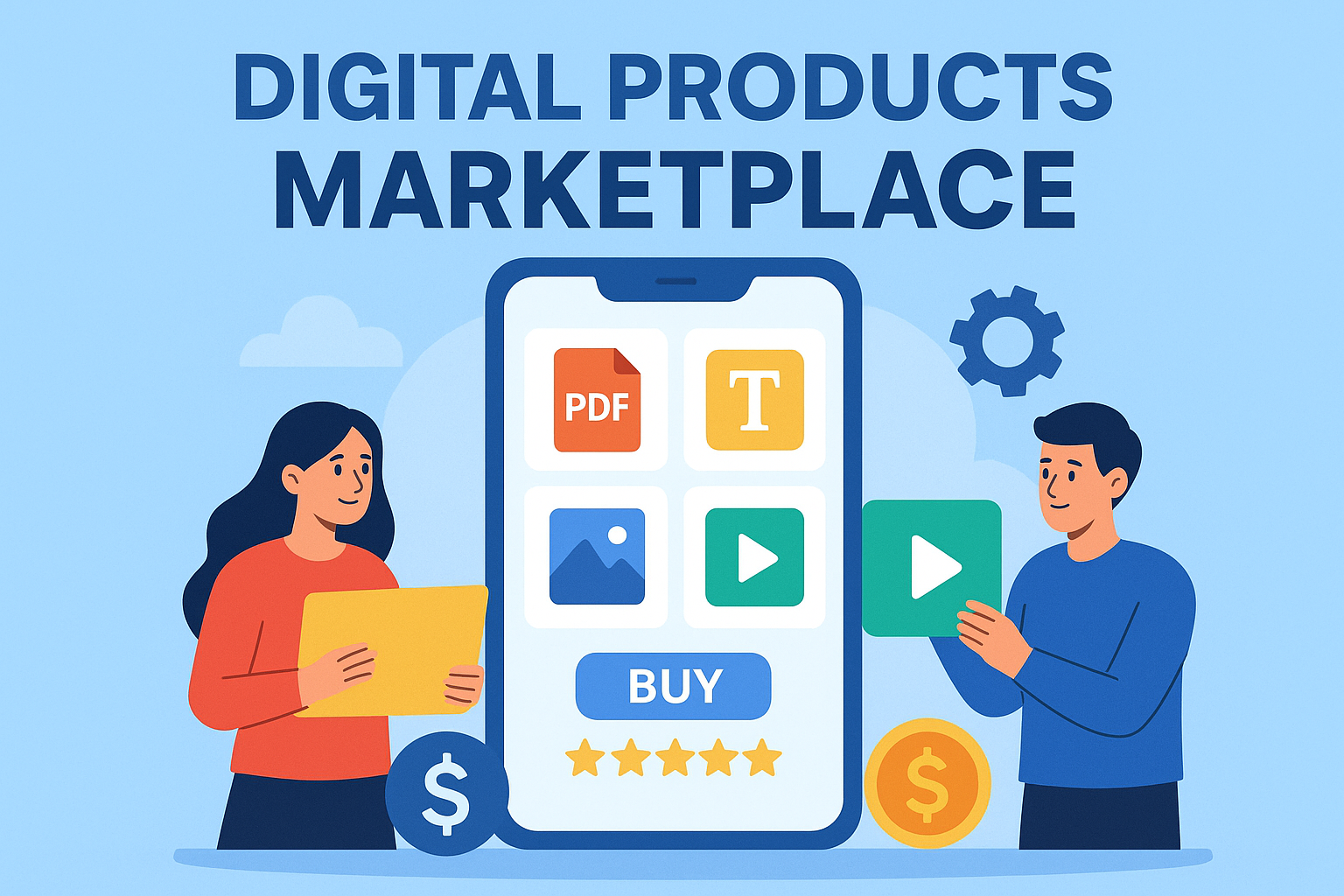
In today’s creator-driven economy, digital products have become one of the most profitable online business models. From eBooks and templates to courses, software, and digital art, millions of people are buying digital products every day. A Digital Products Marketplace is an online platform where creators can upload and sell digital goods, while customers can browse and instantly download them after purchase.
If you want to start your own Digital Products Marketplace, this blog will guide you through everything — concept, workflow, features, tech stack, and monetization strategies.
📌 What is a Digital Products Marketplace?
A Digital Products Marketplace is an online platform where multiple sellers can upload, manage, and sell digital files such as:
eBooks
Graphic templates
Digital planners
Online courses
Software tools
Music, beats, sound effects
Stock photos & videos
Code scripts & plugins
Fonts & UI kits
Printables
It works similar to platforms like Gumroad, Etsy (digital section), Creative Market, and Envato.
📌 Why Start a Digital Products Marketplace?
✔️ Very High Profit Margin
No physical inventory, no shipping, no logistics.
✔️ Passive & recurring income
Once uploaded, digital products sell repeatedly without extra cost.
✔️ Booming creator economy
Millions of creators seek platforms to sell digital assets.
✔️ Global customer base
Anyone across the world can download products instantly.
🧩 Core Features of a Digital Products Marketplace
1. User Registration & Login
Email/Phone login
Google/Apple login
Creator onboarding form
2. Seller Dashboard
Creators get a complete dashboard to manage:
Upload digital files
Set product pricing
Track sales & earnings
Withdraw payments
Manage orders/refunds
3. Product Management
Sellers can add:
Product title
Description
Categories/tags
Preview images
Main downloadable file (zip/pdf/png/mp4 etc.)
4. Secure Digital Delivery
After purchase:
Automatic download link
Link expiry & anti-sharing protection
Watermarking options for images/PDFs
5. Customer Panel
Customers can:
Browse digital products
Add to cart / Buy Now
Instant download
Access previously downloaded items
Leave ratings & reviews
6. Admin Panel
Admin gets full control:
Approve sellers
Approve products
Manage categories
Set commission rates
Monitor sales
Handle disputes/refunds
7. Payment Gateway Integration
Popular options:
Razorpay / Stripe
PayPal
UPI integration (India)
Revenue can be split automatically between admin and seller.
8. Search & Filters
Advanced filters:
Price range
File type
Category
Ratings
Popularity / New arrivals
9. SEO-Friendly Product Pages
Each product gets its own page for ranking on Google.
10. Marketing Tools
Coupon codes
Affiliates
Email notifications
Abandoned cart reminders
⚙️ How the Digital Products Marketplace Works (Step-by-Step)
Step 1: Creator Registers & Becomes a Seller
They submit verification documents and complete profile.
Step 2: Seller Uploads Digital Product
Uploads main file + preview + description.
Step 3: Admin Reviews & Approves Product
Quality check → product goes live.
Step 4: Customer Purchases
Uses payment gateway and completes order.
Step 5: Instant Digital Delivery
Customer gets immediate file download along with email link.
Step 6: Creator Earns Money
Seller receives money after admin commission deduction.
Step 7: Seller Withdraws Earnings
Admin approves payout request.
💻 Technology Stack (Recommended)
Frontend
React / Next.js
Tailwind CSS
Backend
Node.js / Laravel / Django
Database
MySQL / PostgreSQL / MongoDB
Storage
AWS S3 / Google Cloud Storage
Payment Integration
Stripe, PayPal, Razorpay
Security
Encrypted download links
SSL
JWT authentication
💰 Monetization Strategies
1️⃣ Platform Commission
E.g., 10–30% from each sale.
2️⃣ Subscription Plans
Premium seller plans with extra features.
3️⃣ Featured Listing Charges
Creators pay to show their products at the top.
4️⃣ Transaction Fees
Processing fees per sale.
5️⃣ Advertisements
Display ads or promoted products.
📈 Growth Strategy
✔️ Onboard top creators with incentives
✔️ Offer free digital products to attract traffic
✔️ Build strong SEO content
✔️ Run email marketing & creator community campaigns
✔️ Provide easy upload tools to attract sellers
🧾 Conclusion
A Digital Products Marketplace is a highly scalable and profitable business model with massive global demand. Once built properly, it can generate recurring passive income with minimal operational cost. By combining strong technology, great UI/UX, and powerful marketing tools, you can build the next big creator platform similar to Creative Market or Envato.