
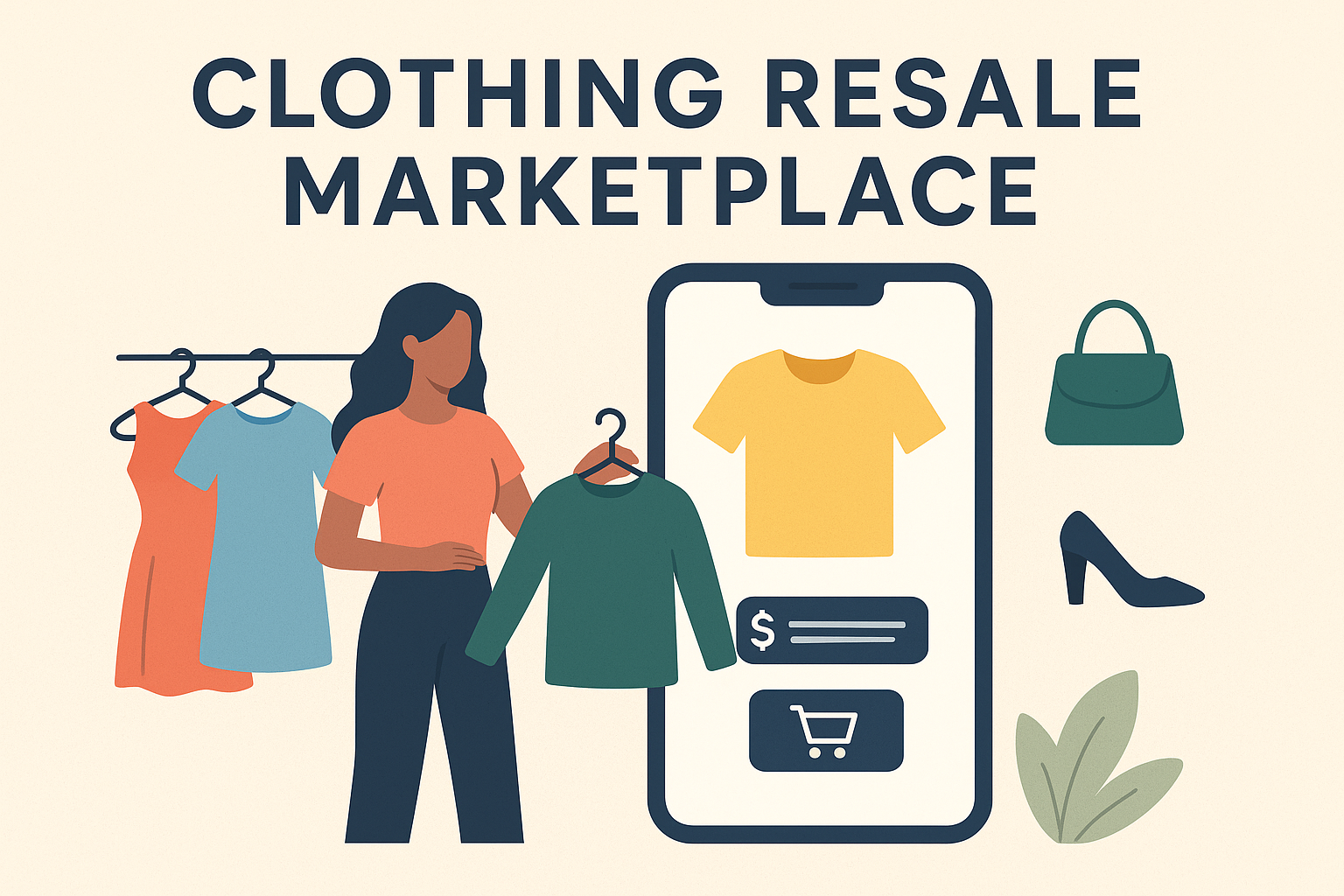
Clothing Resale Marketplace: A Complete Step-by-Step Guide to Building a Profitable Fashion Recommerce Platform
The fashion industry has changed more in the last five years than it did in the previous fifty.
Consumers are shifting from fast fashion to smart fashion, valuing sustainability, affordability, and conscious consumption.
As a result, the resale economy isn’t just growing—it’s exploding.
And at the center of this explosion is one business model that continues to dominate global consumer behavior:
The Clothing Resale Marketplace.
If you're planning to build a digital platform where users can buy, sell, trade, or consign pre-loved apparel, footwear, and accessories, this guide walks you through the process from idea to execution.
1. Why the Clothing Resale Marketplace Is a Billion-Dollar Opportunity
The way people shop has changed.
Today’s customers—especially Gen-Z and millennials—prefer:
Affordable fashion
Sustainable wardrobes
Unique pieces
Minimal waste
Branded items at lower prices
This shift has created a global boom in the recommerce space.
Market trends pushing recommerce growth
The global second-hand apparel industry is projected to reach $350+ billion by 2030.
Platforms like ThredUp, Poshmark, OLX, and Myntra’s preloved categories are skyrocketing.
More people are buying and selling used clothing than ever before.
This demand makes the Clothing Resale Marketplace one of the most profitable and scalable online businesses today.
2. Business Concept: What Your Marketplace Should Do
A Clothing Resale Marketplace is a platform where people can:
For Sellers
Upload pictures of clothes
Describe their condition
Set prices
Receive orders
Ship items
Earn money
For Buyers
Browse categories
Search fashion items
Compare prices
Filter by size, brand, and condition
Buy securely
Track delivery
Your platform becomes the bridge between buyer and seller—safe, organised, and trustworthy.
3. Types of Clothing Items You Can Allow
A rich catalog increases platform value:
Pre-Loved Clothing
T-shirts
Shirts
Tops
Jeans, pants
Dresses
Branded Items
Nike
Zara
H&M
Levi’s
Adidas
…and more
Luxury Resale
Gucci
LV
Prada
Dior
Accessories
Bags
Belts
Shoes
Watches
Jewellery
Kids Clothing
A booming category because kids outgrow clothes quickly.
4. Platform Business Model (How You Will Earn Money)
A clothing resale marketplace can make money through multiple streams:
1. Commission Per Sale
Charge 10–30% commission on each item sold.
2. Seller Listing Fees
Pay per listing or premium features:
Boosted visibility
Featured listing
Top seller badge
3. Subscription Plans
Monthly ₹499–₹1499 plans for:
Unlimited listings
Priority support
Early access to buyers
4. Shipping Fees Handling
Platform earns margins using:
Pre-negotiated courier rates
Buyer-paid shipping
5. Ads & Sponsored Placements
Brands or large sellers can promote their items.
6. Authentication Fees (for luxury items)
Charge for verifying premium branded items.
5. Core Features Your Marketplace Needs
Buyer Features
Category browsing
High-quality images
Size, brand, condition filters
Wishlist
Secure payment
Delivery tracking
Seller Features
Profile dashboard
Upload item photos
Set price & discount
Manage orders
Earnings dashboard
Withdrawal options
Admin Features
User verification
Order management
Commission control
Dispute management
Analytics & reporting
6. Technology Stack for the Platform
Frontend
React.js
Next.js
Vue.js
Backend
Node.js
Django
Laravel
Database
MongoDB
PostgreSQL
Cloud Storage
AWS S3
Cloudflare
Firebase
Payment Gateway
Razorpay
Stripe
7. Seller Onboarding Process (Step by Step)
User signs up
Uploads ID for verification
Creates seller profile
Uploads product photos
Enters condition, size, brand
Sets price
Item gets approved
Item becomes live on marketplace
Orders start coming
Seller ships & gets paid
8. Quality Control System
The biggest trust factor in resale marketplaces is condition transparency.
Your platform must have:
Grading System
New / Like New
Gently Used
Used
Needs repair
Quality Control Photos
Show:
Fabric close-up
Brand tag
Size tag
Any damage
9. Logistics & Shipping Model
You have three options:
A. Seller-Managed Shipping
Seller ships using any courier.
B. Platform-Managed Shipping
You negotiate rates with courier partners.
C. Drop-Off Points
Sellers drop items at nearby partner stores.
10. Marketing Strategy to Grow the Platform
1. Instagram Reels + UGC Content
Show:
Before/after styling
Thrifted outfits
Trending fashion picks
2. Influencer Collaborations
Work with fashion creators.
3. Search Engine Optimization
Blogs like:
“Top 10 Thrift Stores Online in India”
“Best Websites to Sell Old Clothes”
4. Referral Program
Invite a friend → get ₹100 credit
Sell your first item → free shipping
5. City-Based Launch
Start in 1–2 cities, then expand.
11. Customer Trust & Safety Measures
Buyers must feel protected.
Include:
Secure payments
Return policy
Fraud detection
Authenticity checks
Verified sellers
Buyer protection badge
12. Revenue Growth & Future Expansion
Once your marketplace stabilizes, expand into:
A. Branded Resale Tie-Ups
Brands offload overstock to your platform.
B. AI-Powered Price Estimator
Helps sellers choose accurate pricing.
C. Visual Search
Users take photos to find similar products.
D. Offline Thrift Pop-Up Stores
Hybrid model for bigger revenue.
E. Global Shipping
Cross-border resale is a booming sector.
Final Thoughts
A Clothing Resale Marketplace is more than just an ecommerce platform—
it’s a cultural movement around sustainability, affordability, and conscious fashion.
If you design the experience well, onboard verified sellers, provide strong logistics support, and build trust with buyers, this business can scale from a small city startup to a national or international fashion ecosystem.