AI Diet & Meal Planner — The Future of Personalized Nutrition (2025 Expert Guide)
How Smart Founders Can Build a Scalable, High-Demand Healthtech Business
Nutrition is no longer about generic diet charts or one-size-fits-all meal plans.
People want personalized, data-driven, and goal-specific diet solutions.
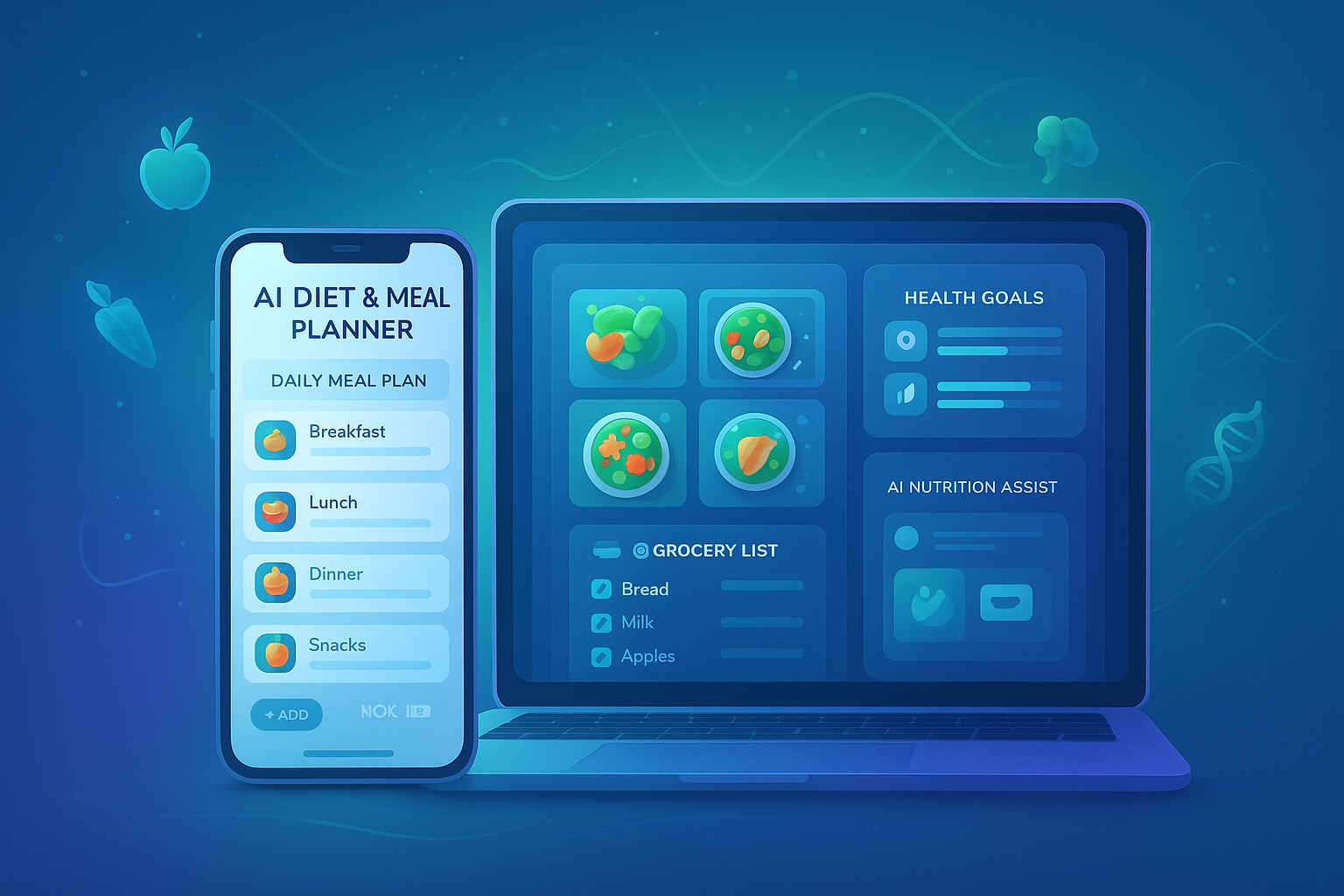
Enter the AI Diet & Meal Planner — a next-generation platform that builds scientifically accurate, personalized meal plans, and dynamic diet recommendations based on user health data, preferences, goals, and lifestyle patterns.
This is not just another fitness app.
This is healthcare + AI + personalization = a billion-dollar opportunity.
Let’s break down the full blueprint.
1. What Is an AI Diet & Meal Planner?
An AI Diet & Meal Planner is a smart digital assistant that:
✔️ Generates meal plans tailored to your goals (weight loss, muscle gain, diabetes, PCOS, heart health)
✔️ Analyzes food preferences, allergies, intolerances
✔️ Calculates calories, macros, micros in real time
✔️ Suggests recipes based on available ingredients
✔️ Tracks progress and adjusts diet automatically
✔️ Integrates with wearables and glucose monitors
✔️ Provides grocery lists + nutrition breakdowns
✔️ Understands your habits and auto-corrects your diet
In short:
an AI nutritionist that fits in your pocket — accurate, affordable, and always available.
2. Why This Business Has Massive Market Demand (2025–2030)
🔥 Key Market Drivers
Rise in lifestyle diseases (diabetes, obesity, PCOS)
Growing demand for personalized health solutions
Wearables and smart health devices generating continuous data
Rising fitness culture among Gen Z & Millennials
Busy lifestyles → people want quick, accurate, automated guidance
🔥 Market Numbers
Global digital nutrition market: $45B by 2030
70% of people try at least one diet per year
80% stop because plans are not personalized
8 out of 10 gym members want AI-driven plans
You’re building a product with global demand — in India, US, Middle East, Europe, everywhere.
3. How an AI Diet & Meal Planner Works — End-to-End Workflow
Step 1: User Inputs
Age, weight, height
Goals (lose fat, gain muscle, maintain, medical nutrition)
Activity level
Allergies, intolerances
Food preferences (veg, non-veg, vegan, keto, Jain, etc.)
Health conditions (diabetes, PCOS, thyroid, etc.)
Step 2: AI Analysis Engine
AI calculates:
Daily calorie intake
Macro split (protein, carbs, fats)
Micro requirements (vitamins, minerals)
Glycemic response
Lifestyle impact (sleep, stress, routine)
Step 3: AI Generates Meal Plans
Breakfast, lunch, dinner, snacks
Indian + global cuisines
Easy, quick recipes
Ingredient options
Real-time calorie tracking
Portion sizes
Step 4: Dynamic Adjustments
AI updates plans based on:
Weight change
Activity tracking
Meal skips
User feedback: “I feel hungry”, “This was too heavy”
Step 5: Additional User Tools
Grocery list
Smart recipe suggestions
Barcode scanning
Restaurant meal analysis
Wearable integration (Fitbit, Apple Watch, CGM)
4. Core Features Your Platform Must Have
1. Personalized Diet Generator
Custom diet charts
Regional recipes
Macro tracking
Goal-based recommendations
2. Recipe Engine
1000+ recipes
Step-by-step cooking instructions
Ingredient substitutions
3. AI Food Recognition
Upload food photo → AI identifies calories
Supports Indian meals (roti, dal, biryani, dosa etc.)
4. Grocery Planner
Smart shopping list
Weekly meal prep
Auto-optimized budget grocery list
5. Health Condition Support
Plans for:
Diabetes
PCOS
Thyroid
Heart patients
High cholesterol
Pregnancy
6. Smart Habit Tracker
Water intake
Sleep
Steps
Eating schedule
Stress levels
7. Wearable Integrations
AI recalculates diet based on:
Steps
Heart rate
Blood sugar data
Sleep quality
5. Technology & Architecture
AI & ML Components
Nutrition LLM
RAG (knowledge retrieval for food databases)
Image recognition (food detection)
Metabolic pattern prediction models
Behavioral habit AI
Reinforcement learning for dynamic adjustments
Data Sources
USDA nutrition database
FSSAI nutrition charts
Clinical diet and nutrition guidelines
Global recipe datasets
Glycemic index datasets
Tech Stack
Frontend: Flutter / React / Next.js
Backend: Node.js + Python
AI Models: PyTorch, TensorFlow, OpenAI models
Databases: MongoDB, PostgreSQL
Cloud: AWS / GCP / Azure
6. Monetization Models — 10 Powerful Revenue Streams
1. Subscription Plans
Monthly / Yearly premium
Personalized coaching add-on
2. Meal Prep Partnerships
Partner with cloud kitchens for:
Healthy meals
Keto meals
Weight loss meals
3. Grocery Affiliate Revenue
Earn commissions from:
Amazon
BigBasket
Zepto
4. AI Coach Add-ons
Paid upgrades:
AI weight-loss coach
AI diabetic coach
AI PCOS coach
5. Corporate Wellness Plans
Sell to:
Offices
Gyms
Schools
Clinics
6. Diet API Licensing
Allow gyms, fitness apps, hospitals to use your AI engine.
7. Nutritionist Marketplace
Commission from:
Dietitian consultations
Customized meal plans
8. Wearable Integrations
Affiliate from smart bands & smart watches.
9. Fitness Brand Collaborations
Protein companies
Workout apps
Supplement brands
10. Ads (ethical only)
For healthy food products, wellness brands.
7. Go-to-Market Strategy (GTM)
Phase 1 — Build Educational Content
Diet tips
Recipe reels
Healthy lifestyle guides
Phase 2 — MVP Launch
Include:
Basic meal planner
Calorie calculator
Recipe engine
Phase 3 — Scale Features
AI chat
Wearable support
Image-based calorie detection
Phase 4 — Multi-language Expansion
Support:
Hindi
Bengali
Tamil
Telugu
Arabic
Spanish
Phase 5 — Brand Positioning
Position as:
“Your Personal AI Nutritionist — Anytime, Anywhere.”
8. Competitive Landscape
Existing Players
MyFitnessPal
HealthifyMe
MyPlate
Noom
Cronometer
Your Advantage
AI-first
Personalized meal plans
Indian food database
Medical-health integration
Dynamic adaptive diet
9. Future Expansion Opportunities
AI cooking assistant
Blood-test integrated nutrition plans
AI PCOS & diabetic management system
Smart kitchen device integration
AI-based metabolic age detector
Supplements recommendation system
The future belongs to hyper-personalized, smart, AI-driven nutrition — and you can be one of the pioneers.