
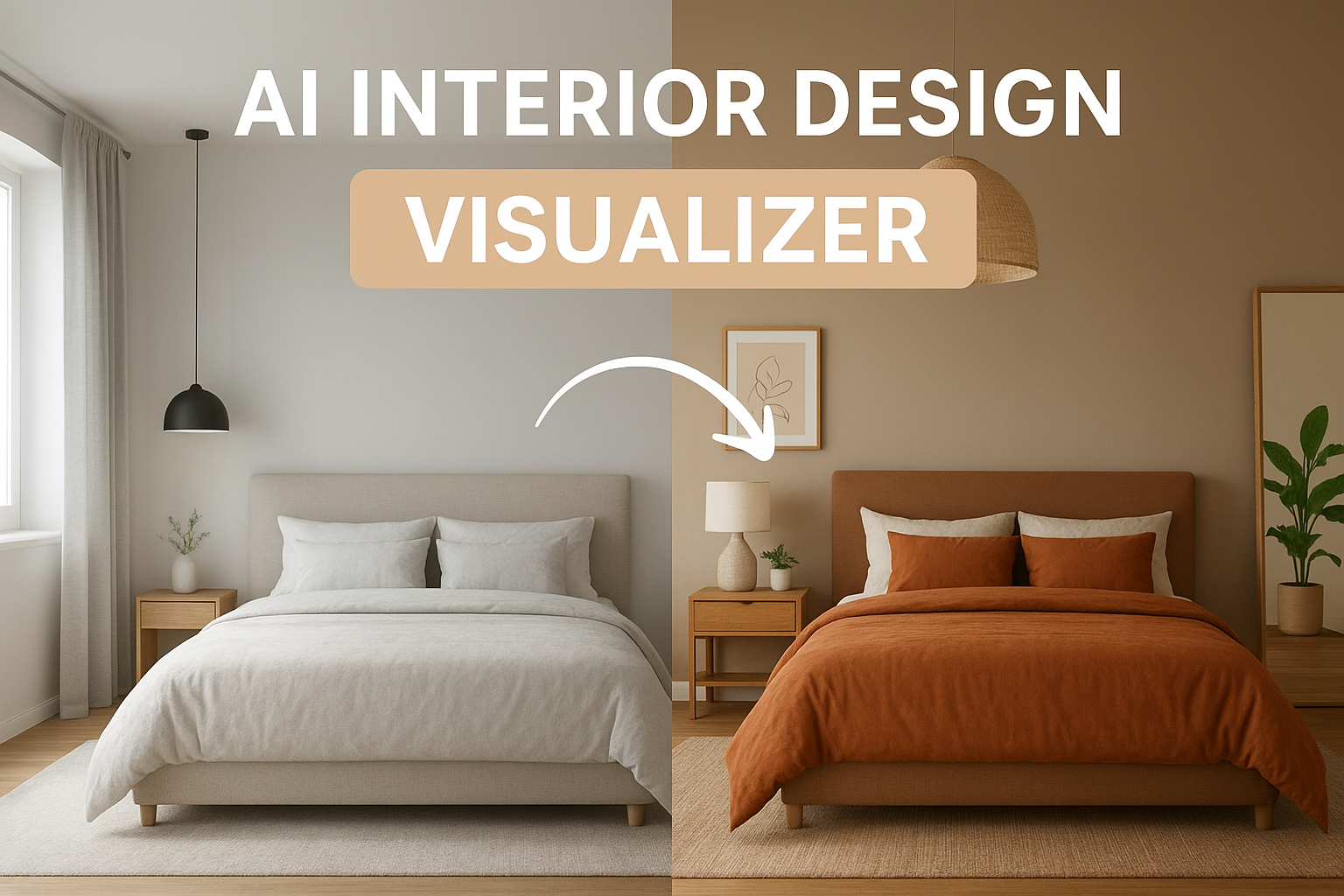
AI Interior Design Visualizer: The Future of Home & Space Transformation
Interior design has always been a blend of creativity, imagination, and physical labor. For decades, homeowners, architects, and designers depended on mood boards, sketches, and long trial-and-error processes to finalize a space.
But today, a new revolution is reshaping the industry — AI Interior Design Visualizers.
These powerful platforms can redesign any room within seconds, offering multiple styles, furniture layouts, color combinations, and immersive visual experiences. What once required an entire design team, now happens instantly with AI.
In this blog, we’ll break down:
What an AI Interior Design Visualizer is
How it works
Step-by-step process
Key features
Market opportunity
Monetization strategies
Tech stack
Marketing strategy
Future growth
Final conclusion
Let’s dive in.
What Is an AI Interior Design Visualizer?
An AI Interior Design Visualizer is a smart software tool that uses artificial intelligence to automatically redesign interior spaces. Users upload a room photo, choose a style, and within seconds, the AI generates a fully redesigned version of that space.
The AI can:
Replace furniture
Change wall colors
Add décor
Rearrange layout
Suggest lighting improvements
Generate multiple design variations
It’s like having an expert designer available 24/7 — but faster, cheaper, and infinitely scalable.
Why This Business Idea Is Booming (Market Opportunity)
The interior design market is undergoing a digital transformation. Some powerful trends:
📌 1. Global Home Decor Market → $898 Billion by 2030
People are spending more on home décor and lifestyle upgrades.
📌 2. Rise of Real Estate Tech
Builders, realtors, and architects need instant visualizations to close deals faster.
📌 3. DIY Culture & Home Renovation Trend
Consumers want to visualize designs before investing money.
📌 4. AI Adoption is Exploding
AI tools like Midjourney, DALL·E, and Runway have already normalized generative visuals.
This creates a huge opportunity for AI-powered home design platforms.
How an AI Interior Design Visualizer Works (Backend Logic)
1. User uploads a room photo
Bedroom, kitchen, office, living room — anything.
2. AI identifies objects (Object Detection + Segmentation)
Walls, chairs, sofas, windows, décor items, lighting, etc.
3. AI cleans the room image
Removes existing furniture if needed (Inpainting).
4. User selects design preferences
Modern
Minimalist
Luxury
Scandinavian
Bohemian
Industrial
Traditional
Japandi
…or any custom theme.
5. AI generates redesigned scenes
Using:
Generative AI models
Scene reconstruction
Texture replacement
Lighting adjustment
6. User edits the output
Move furniture, change colors, download HD images.
7. Optional AR Mode
User places furniture in their real room through a mobile app.
Step-by-Step Process (Detailed Flow)
1. Sign Up / Login
Users create an account or continue as a guest.
2. Upload Room Photo
The platform guides them to take a proper angle.
3. Select a Design Style
Choose from 25–50 preset themes.
4. AI Cleans & Analyzes the Image
Removes clutter → identifies walls, floor, layout.
5. Generate Concepts
AI produces:
1–10 variations
Different furniture layouts
Mood and color options
6. Customize
Users can:
Swap furniture
Change colors
Try different layouts
Add décor items
Save favorites
7. Export
Download in:
PNG / JPG
4K / 8K resolution
Full project PDF (premium)
8. Buy Recommended Products (Optional)
Link the design to real furniture stores for monetization.
Key Features (Must-Have for Your Platform)
⭐ 1. AI Style Generator
Instant design transformations.
⭐ 2. Furniture Replacement & Layout Suggestions
⭐ 3. 3D Room Reconstruction
Turn 2D photos into 3D models.
⭐ 4. Real-Time Rendering
⭐ 5. AR Furniture Try-On
Place items in real room via mobile.
⭐ 6. E-commerce Integration
Amazon, IKEA, Pepperfry, Urban Ladder, etc.
⭐ 7. Project Management Tools
For professional designers.
Business Model / Monetization
🟦 1. Subscription Plans
Basic: 20 renders/month
Pro: Unlimited renders
Business: Team access
🟩 2. Pay-Per-Render Credits
🟨 3. Furniture Affiliate Commissions
Earn 5–15% per sale.
🟧 4. White-Label Solutions
Sell the tool to real estate companies & design firms.
🟪 5. API Access
Developers pay per API call.
Tech Stack (Ideal for AI Interior Design Platform)
Frontend
React / Next.js
Tailwind CSS
Three.js (for 3D visualization)
Backend
Node.js / Python (FastAPI, Flask)
PostgreSQL / Firebase
AI Models
Stable Diffusion (image-to-image)
ControlNet (layout control)
SAM (Segmentation)
Inpainting models
LLM for design suggestions
Cloud
AWS / GCP / Azure
Cloudflare for CDN
Marketing Strategy (High-Impact)
1. Instagram & Pinterest
Post before-after room transformations.
2. Target Realtors
Offer them AI-generated furnished rooms.
3. Home Decor Influencers
Paid partnerships.
4. SEO & Blogging
Target keywords:
"AI interior design tool"
"Redesign room with AI"
"AI home décor ideas"
5. YouTube Tutorials
“How to redesign your room using AI”.
6. Sell to Businesses
Architects
Interior designers
Furniture stores
Real estate builders
Future of AI Interior Design
Within 5 years, AI tools will:
Generate fully walkable 3D homes
Produce construction-ready blueprints
Help users design furniture
Integrate with VR/AR headsets
Automate home renovation planning
This business has long-term scalable potential.
Conclusion
AI Interior Design Visualizers are reshaping the future of home design by making the entire process faster, more affordable, and more interactive. Whether you are building a startup, improving a real estate workflow, or empowering homeowners, this technology creates huge opportunities.