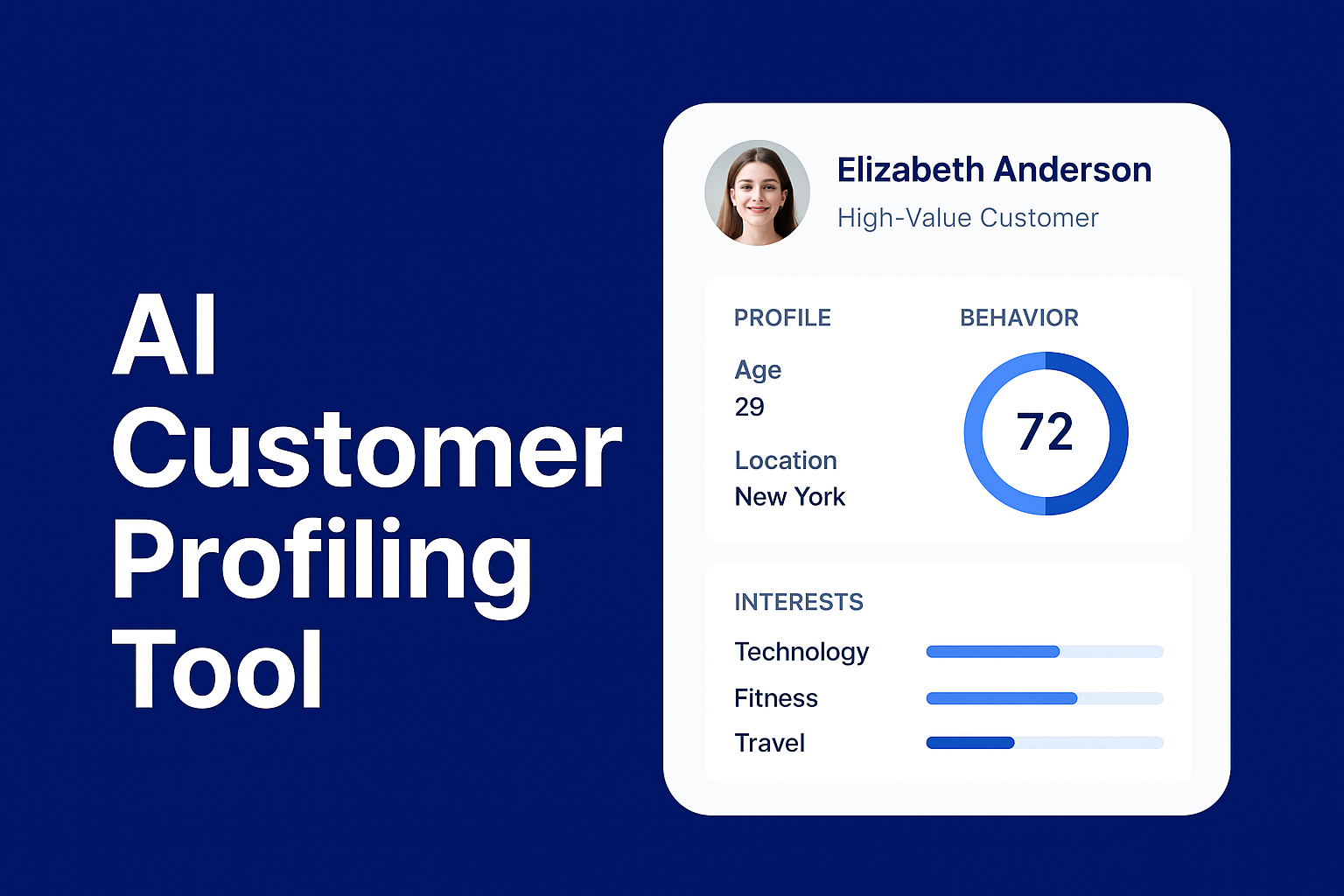
AI Customer Profiling Tool: The Next Evolution of Personalized Business Intelligence
In the age of hyper-personalization, businesses no longer win by guessing customer needs. They win by understanding customers at a deeper, more precise, data-driven level. Traditional customer profiling relies on basic demographic information — age, gender, location — which is no longer enough in a world where consumers expect instant, tailored experiences across every digital touchpoint.
The solution?
A powerful AI Customer Profiling Tool that turns raw customer data into accurate personas, behavioral insights, and predictive intelligence.
This blog explores how the technology works, why it is becoming essential, and how businesses can use it to build smarter, more profitable customer experiences.
1. What Is an AI Customer Profiling Tool?
An AI Customer Profiling Tool is a data analytics system powered by artificial intelligence that analyzes customer data to create dynamic, behavior-based profiles. Unlike traditional methods, AI continuously learns from every interaction to create real-time insights into:
Buying behavior
Interests and preferences
Pain points
Lifetime value
Spending habits
Product affinities
Churn probability
Engagement levels
Personality patterns
It builds a complete 360° picture of each customer so brands can deliver hyper-personalized experiences.
2. Why Traditional Customer Profiling No Longer Works
Weaknesses of Traditional Methods:
❌ Static information
❌ One-time surveys
❌ Generalized personas
❌ Slow research cycles
❌ Human bias
❌ No real-time updates
Customers are dynamic — their needs change weekly.
AI solves this with continuous learning.
3. How an AI Customer Profiling Tool Works
The AI tool integrates with data sources like:
CRM
Website analytics
Mobile apps
Social media
Email marketing tools
Marketplace behavior
POS systems
Chatbots & support tickets
AI models then break down the data into the following key processes:
3.1 Data Collection & Integration
AI gathers data from hundreds of touchpoints:
Clicks
Browsing patterns
Purchase history
Customer support queries
Social interactions
Sentiment patterns
Campaign responses
Everything feeds into a central customer knowledge engine.
3.2 Data Cleaning & Normalization
Raw data is messy.
AI removes duplicates, fixes inconsistencies, filters bots, and standardizes data formats — reducing human errors.
3.3 Customer Segmentation using ML Algorithms
AI clusters customers by:
Behavior
Intent
Frequency
Value
Interests
Lifecycle stage
Referral potential
Segmentation models include:
K-means clustering
Decision trees
Logistic regression
RFM models
Neural networks
3.4 Predictive Analytics
AI predicts:
What the customer will buy next
When they will purchase
Which products they’ll prefer
Whether they’re at risk of churn
Lifetime value (CLV)
Discount sensitivity
Upsell/cross-sell opportunities
This shifts businesses from reactive → proactive.
3.5 Customer Persona Generation
AI automatically builds dynamic, real-time personas:
“Discount-Driven Buyer”
“Premium Shopper”
“Loyal Subscriber”
“Window Shopper”
“Seasonal Buyer”
“High-Intent Visitor”
Each persona updates continuously based on new behaviors.
3.6 Sentiment & Emotion Analysis
AI uses NLP to understand:
Customer emotions
Frustration indicators
Intent signals
Product satisfaction levels
This elevates customer service quality dramatically.
4. Key Features of an AI Customer Profiling Tool
⭐ 1. 360° Customer View Panel
A unified dashboard showing:
Profile details
Behaviour summary
Purchase timeline
Preferred categories
Channel activity
Loyalty score
CLV (Customer Lifetime Value)
⭐ 2. Predictive Customer Scoring
Scores customers based on:
Churn risk
Buying probability
Engagement likelihood
⭐ 3. Smart Segmentation
AI creates segments like:
High spenders
At-risk customers
New visitors
Repeat buyers
Abandoned cart users
⭐ 4. Personalized Recommendation Engine
AI suggests:
Product bundles
Discounts
Messaging tone
Ideal communication channels
⭐ 5. Behavior Flow Tracking
AI maps customer journeys:
How they enter
What they view
Where they get stuck
What influences buying
⭐ 6. Real-Time Alerts
E.g., “Customer at risk of churn — send re-engagement offer.”
⭐ 7. Integration with Marketing Tools
Works with:
Email automation
CRM
Chatbots
Ads
Social media tools
E-commerce stores
5. Business Use Cases
E-commerce
Predict buying behavior and personalize product suggestions.
SaaS
Reduce churn with predictive scoring.
Retail
Identify frequent buyers, high spenders, and discount-sensitive customers.
Banks & Fintech
Profile customers for risk, lending, and investment patterns.
Healthcare
Better understand patient engagement and service needs.
Hospitality
Profile guests for personalized experiences.
6. Benefits of Using AI Customer Profiling
✔ Hyper-personalized campaigns
✔ Increased customer retention
✔ Higher conversion rates
✔ Lower customer acquisition cost
✔ Better product recommendations
✔ Improved customer service
✔ Enhanced customer lifetime value
✔ Strategic business decisions
7. Monetization Model (If You Build This as a SaaS)
💰 Subscription plans
💰 Pay-Per-Customer-Profile
💰 API usage billing
💰 Enterprise packages
💰 Data analytics consulting add-ons
8. Technologies Used
AI & ML
PyTorch
TensorFlow
Scikit-learn
NLP (Transformers, BERT)
Backend
Python
Node.js
PostgreSQL
MongoDB
Frontend
Next.js
React
Tailwind
Cloud
AWS / Azure / GCP
9. Future of AI in Customer Profiling
The next evolution will include:
Full digital twins of customers
Autonomous marketing decisions
3D persona modeling
Emotion-aware product suggestions
AI-driven segmentation that updates every minute
AI will not only understand customers — it will anticipate their needs.
Conclusion
An AI Customer Profiling Tool is no longer optional — it is the backbone of modern business intelligence. Companies that adopt AI-driven profiling gain:
Deeper customer understanding
Stronger personalization
Better retention
Higher revenue
Long-term competitive advantage
AI Customer Profiling Tool: The Next Evolution of Personalized Business Intelligence
In the age of hyper-personalization, businesses no longer win by guessing customer needs. They win by understanding customers at a deeper, more precise, data-driven level. Traditional customer profiling relies on basic demographic information — age, gender, location — which is no longer enough in a world where consumers expect instant, tailored experiences across every digital touchpoint.
The solution?
A powerful AI Customer Profiling Tool that turns raw customer data into accurate personas, behavioral insights, and predictive intelligence.
This blog explores how the technology works, why it is becoming essential, and how businesses can use it to build smarter, more profitable customer experiences.
1. What Is an AI Customer Profiling Tool?
An AI Customer Profiling Tool is a data analytics system powered by artificial intelligence that analyzes customer data to create dynamic, behavior-based profiles. Unlike traditional methods, AI continuously learns from every interaction to create real-time insights into:
Buying behavior
Interests and preferences
Pain points
Lifetime value
Spending habits
Product affinities
Churn probability
Engagement levels
Personality patterns
It builds a complete 360° picture of each customer so brands can deliver hyper-personalized experiences.
2. Why Traditional Customer Profiling No Longer Works
Weaknesses of Traditional Methods:
❌ Static information
❌ One-time surveys
❌ Generalized personas
❌ Slow research cycles
❌ Human bias
❌ No real-time updates
Customers are dynamic — their needs change weekly.
AI solves this with continuous learning.
3. How an AI Customer Profiling Tool Works
The AI tool integrates with data sources like:
CRM
Website analytics
Mobile apps
Social media
Email marketing tools
Marketplace behavior
POS systems
Chatbots & support tickets
AI models then break down the data into the following key processes:
3.1 Data Collection & Integration
AI gathers data from hundreds of touchpoints:
Clicks
Browsing patterns
Purchase history
Customer support queries
Social interactions
Sentiment patterns
Campaign responses
Everything feeds into a central customer knowledge engine.
3.2 Data Cleaning & Normalization
Raw data is messy.
AI removes duplicates, fixes inconsistencies, filters bots, and standardizes data formats — reducing human errors.
3.3 Customer Segmentation using ML Algorithms
AI clusters customers by:
Behavior
Intent
Frequency
Value
Interests
Lifecycle stage
Referral potential
Segmentation models include:
K-means clustering
Decision trees
Logistic regression
RFM models
Neural networks
3.4 Predictive Analytics
AI predicts:
What the customer will buy next
When they will purchase
Which products they’ll prefer
Whether they’re at risk of churn
Lifetime value (CLV)
Discount sensitivity
Upsell/cross-sell opportunities
This shifts businesses from reactive → proactive.
3.5 Customer Persona Generation
AI automatically builds dynamic, real-time personas:
“Discount-Driven Buyer”
“Premium Shopper”
“Loyal Subscriber”
“Window Shopper”
“Seasonal Buyer”
“High-Intent Visitor”
Each persona updates continuously based on new behaviors.
3.6 Sentiment & Emotion Analysis
AI uses NLP to understand:
Customer emotions
Frustration indicators
Intent signals
Product satisfaction levels
This elevates customer service quality dramatically.
4. Key Features of an AI Customer Profiling Tool
⭐ 1. 360° Customer View Panel
A unified dashboard showing:
Profile details
Behaviour summary
Purchase timeline
Preferred categories
Channel activity
Loyalty score
CLV (Customer Lifetime Value)
⭐ 2. Predictive Customer Scoring
Scores customers based on:
Churn risk
Buying probability
Engagement likelihood
⭐ 3. Smart Segmentation
AI creates segments like:
High spenders
At-risk customers
New visitors
Repeat buyers
Abandoned cart users
⭐ 4. Personalized Recommendation Engine
AI suggests:
Product bundles
Discounts
Messaging tone
Ideal communication channels
⭐ 5. Behavior Flow Tracking
AI maps customer journeys:
How they enter
What they view
Where they get stuck
What influences buying
⭐ 6. Real-Time Alerts
E.g., “Customer at risk of churn — send re-engagement offer.”
⭐ 7. Integration with Marketing Tools
Works with:
Email automation
CRM
Chatbots
Ads
Social media tools
E-commerce stores
5. Business Use Cases
E-commerce
Predict buying behavior and personalize product suggestions.
SaaS
Reduce churn with predictive scoring.
Retail
Identify frequent buyers, high spenders, and discount-sensitive customers.
Banks & Fintech
Profile customers for risk, lending, and investment patterns.
Healthcare
Better understand patient engagement and service needs.
Hospitality
Profile guests for personalized experiences.
6. Benefits of Using AI Customer Profiling
✔ Hyper-personalized campaigns
✔ Increased customer retention
✔ Higher conversion rates
✔ Lower customer acquisition cost
✔ Better product recommendations
✔ Improved customer service
✔ Enhanced customer lifetime value
✔ Strategic business decisions
7. Monetization Model (If You Build This as a SaaS)
💰 Subscription plans
💰 Pay-Per-Customer-Profile
💰 API usage billing
💰 Enterprise packages
💰 Data analytics consulting add-ons
8. Technologies Used
AI & ML
PyTorch
TensorFlow
Scikit-learn
NLP (Transformers, BERT)
Backend
Python
Node.js
PostgreSQL
MongoDB
Frontend
Next.js
React
Tailwind
Cloud
AWS / Azure / GCP
9. Future of AI in Customer Profiling
The next evolution will include:
Full digital twins of customers
Autonomous marketing decisions
3D persona modeling
Emotion-aware product suggestions
AI-driven segmentation that updates every minute
AI will not only understand customers — it will anticipate their needs.
Conclusion
An AI Customer Profiling Tool is no longer optional — it is the backbone of modern business intelligence. Companies that adopt AI-driven profiling gain:
Deeper customer understanding
Stronger personalization
Better retention
Higher revenue
Long-term competitive advantage