Hyperlocal Grocery Delivery Website – Complete Business Process
1. Introduction
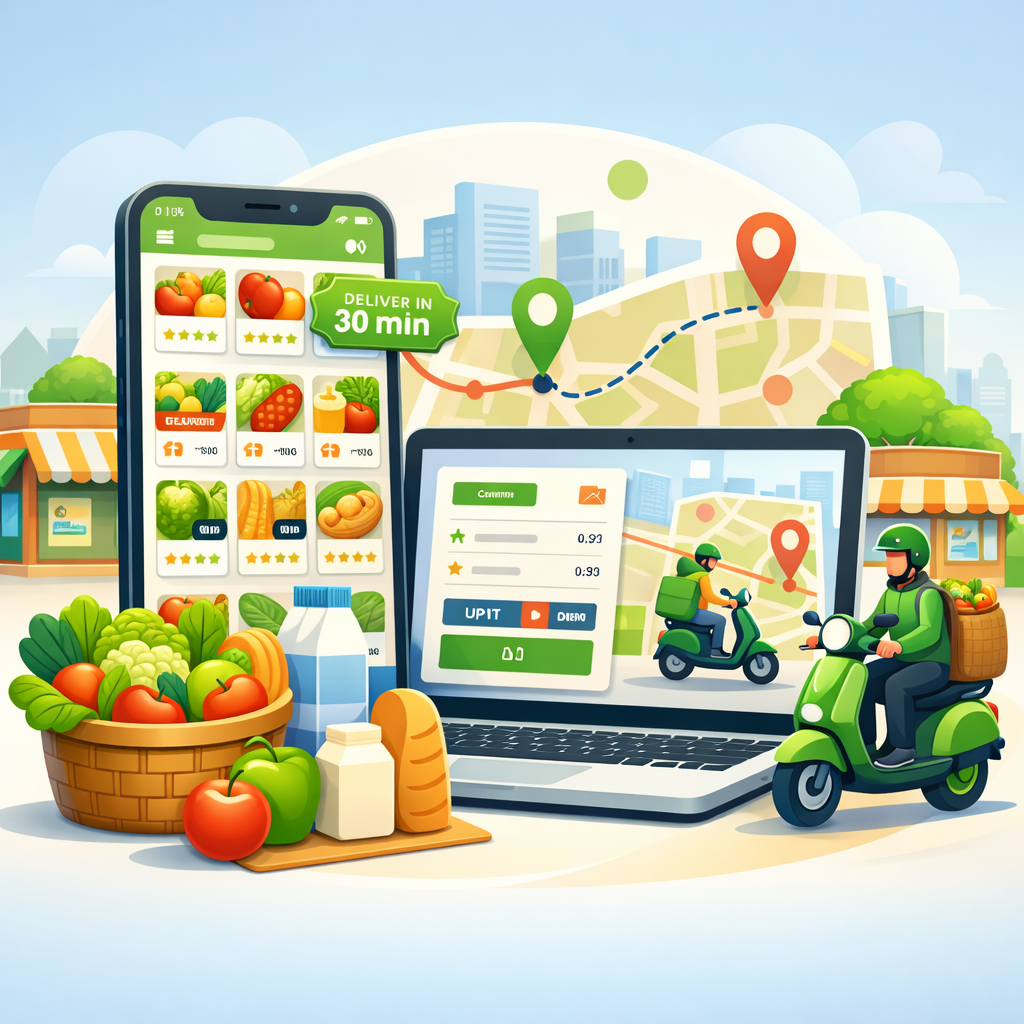
A Hyperlocal Grocery Delivery Website connects nearby grocery stores, supermarkets, and local vendors with customers in a specific area. Orders are fulfilled from nearby stores and delivered within minutes or hours, ensuring freshness, speed, and convenience. This model is ideal for urban and semi-urban locations where customers prefer quick delivery of daily essentials.
2. How the Hyperlocal Grocery Model Works
Customer Places Order
Users browse groceries on the website/app, select items, choose a delivery slot, and make payment.
Nearest Store Matching
The system automatically assigns the order to the nearest available grocery store based on location and stock.
Order Confirmation
The store accepts the order and starts packing items.
Delivery Partner Assignment
A nearby delivery agent is assigned for quick pickup.
Fast Delivery
Groceries are delivered within 30–90 minutes.
Order Tracking & Feedback
Customers track orders in real-time and leave ratings after delivery.
3. Target Audience
Urban households
Working professionals
Senior citizens
Students & hostels
Small restaurants & cafés
4. Key Features of the Website
Customer Panel
User registration & login
Location-based store discovery
Product search & filters
Smart cart & quick checkout
Multiple payment options (UPI, cards, wallets, COD)
Real-time order tracking
Order history & re-order option
Vendor (Store) Panel
Store registration & verification
Product & inventory management
Order management dashboard
Pricing & discount control
Sales analytics
Delivery Partner Panel
Order assignment alerts
GPS navigation
Earnings dashboard
Availability toggle
Admin Panel
Vendor & delivery partner management
Commission settings
Order & payment monitoring
Offer & coupon management
Analytics & reports
5. Revenue Model
Commission from Stores (5%–20% per order)
Delivery Charges from customers
Subscription Plans for vendors
Featured Listings & Ads
Surge Pricing during peak hours
6. Technology Stack Required
Frontend: React / Next.js / Flutter (for mobile app)
Backend: Node.js / Django / Laravel
Database: PostgreSQL / MongoDB
Maps & Location: Google Maps API
Payments: Razorpay / Stripe / Paytm
Notifications: Firebase / SMS APIs
Cloud Hosting: AWS / Azure / Google Cloud
7. Operations & Logistics
Partner with local grocery stores
Hire or onboard delivery partners
Maintain quality checks & packaging standards
Real-time inventory sync
Customer support & dispute handling
8. Marketing Strategy
Local SEO & Google My Business listings
Social media ads (Facebook, Instagram)
Referral & cashback programs
First-order discounts
Partnerships with housing societies
9. Legal & Compliance
Business registration & GST
Vendor agreements
Delivery partner contracts
Data privacy & payment compliance
10. Future Growth Opportunities
Private label grocery products
Subscription-based monthly grocery plans
AI-based demand prediction
Expansion to medicines & essentials
Dark store model for faster delivery
11. Conclusion
A Hyperlocal Grocery Delivery Website is a scalable and high-demand business model. With the right technology, strong local partnerships, and efficient delivery operations, it can quickly grow into a profitable venture while serving daily needs with speed and reliability.